Banco de Questões

A ferramenta completa para a sua preparação em concursos

Questões de Língua Inglesa

35.421 questões encontradas

  1. Questão 741

    ID 3171827

    Disciplina: Língua Inglesa

    Assunto: Condição | Condition

    Ano: 2023 Banca: FGV - Fundação Getúlio Vargas Órgão: Prefeitura Municipal de São José dos Campos


    Read Text IV and answer the ten questions that follow it

    Text IV

    Teaching Reading Strategies

    No matter what we are reading there are effective reading strategies we call on in order to make meaning from the text. Many of these strategies can be taught with comics and graphic novels. The ones highlighted below are particularly important when reading graphic texts.

    Drawing Inferences

    In comics and graphic novels, perhaps more than any other text, readers must build understanding by filling in gaps. A whole world of information is left in the gutter between the panels. The comic artist expects the reader to infer the action that takes place off the page. The more complex and sophisticated the comic, the more important this strategy becomes. If the reader is not making inferences, he is lost. Understanding this strategy and using it effectively will help students read ’between the lines’ in more traditional print narratives.

    Visualization

    Students who struggle with reading may not understand what should be going on in the reader’s imagination during reading. With comics and other visual texts, the images are there for the reader. Through comics students can be taught how to create their own mental images when reading more traditional texts.

    It is important that students understand the visual cues that are provided in the text. Although the words and images work together to tell the story, comics are primarily visual narratives. Therefore readers must draw on and integrate some important background knowledge and understandings about visual texts, comic elements and narrative structures in order to make meaning. The more knowledge readers have about the way visual texts work, the more successful they are likely to be.

    Adapted from https://www.literacytoday.ca/home/reading/reading-strategies/reading-visual-texts/reading-comics


    The excerpt “If the reader is not making inferences” (2nd paragraph) presents a(n):
    Alternativas da questão 3171827
  2. Questão 742

    ID 3171826

    Disciplina: Língua Inglesa

    Assunto: Presente Progressivo | Present Continuous

    Ano: 2023 Banca: PREFEITURA DE BOMBINHAS - SC Órgão: Prefeitura Municipal de Bombinhas


    Select the alternative that correctly completes the sentence with the present continuous:

    “Joana ____________________ a book.”

    Alternativas da questão 3171826
  3. Questão 743

    ID 3171825

    Disciplina: Língua Inglesa

    Assunto: Interpretação de Texto | Text Interpretation

    Ano: 2023 Banca: EPCAR - Escola Preparatória de Cadetes do Ar Órgão: Ministério da Defesa - Aeronáutica


    Direction: Read the text below and answer questions 33 to 35 according to it.

    TEXT I

    “no one leaves home unless

    home is the mouth of a shark.

    you only run for the border

    5 when you see the whole city

    running as well”.

    Warsan Shire, “Home”. (SHIRE apud YOUSAFZAI, 2019, p. V)

    “I have had the immense privilege of meeting many

    individuals who had to rebuild their lives, often in totally

    foreign places. People who have lost so much - including

    10 loved ones – and then had to start over. This means

    learning a new language, new culture, a new way of

    being. I share my story of being displaced not out of a

    desire to focus on my past, but to honour the people I´ve

    met and those I´ll never meet.

    15 I wrote this book because it seems that too many people

    don´t understand that refugees are ordinary people. All

    that differentiates them is that they got caught in the

    middle of a conflict that forced them to leave their homes,

    their loved ones, and the only lives they had known. They

    20 risked so much along the way, and why? Because it is too

    often a choice between life and death.

    And, as my family did a decade ago, they chose life”.

    (YOUSAFZAI, 2019, P. XI)

    (Source: YOUSAFZAI, M. We are Displaced. Weidenfeld & Nicolson, 2019 – London)


    Choosing life over death means

    Alternativas da questão 3171825
  4. Questão 744

    ID 3171824

    Disciplina: Língua Inglesa

    Assunto: Sinônimos | Synonyms

    Ano: 2023 Banca: QUADRIX - Instituto Quadrix Órgão: Conselho Regional de Medicina do Tocantins


    Text for the items from 31 to 37.

    1 Health technology is defined by the World

    Health Organization as the “application of organized

    knowledge and skills in the form of devices, medicines,

    4 vaccines, procedures, and systems developed to solve

    a health problem and improve quality of lives”. This

    includes pharmaceuticals, devices, procedures, and

    organizational systems used in the healthcare industry, as

    well as computer‑supported information systems.

    Internet:<http://www.en.wikipedia.org/> (with adaptations).

    According to the text, judge the items from 31 to 35.


    The expression “to solve a health problem” (lines 4 and 5) can be correctly replaced by to resolve a health problem.

    Alternativas da questão 3171824
  5. Questão 745

    ID 3171823

    Disciplina: Língua Inglesa

    Assunto: Interpretação de Texto | Text Interpretation

    Ano: 2023 Banca: VUNESP - Fundação para o Vestibular da Universidade Estadual Paulista Órgão: Companhia de Informática de Jundiaí


    Leia o texto para responder às questões de números 21 a 25.

    Information Security (InfoSec) defined

    Information security, often abbreviated InfoSec, is a set of security procedures and tools that broadly protect sensitive enterprise information from misuse, unauthorized access, disruption, or destruction. InfoSec encompasses physical and environmental security, access control, and cybersecurity. It often includes technologies like cloud access security brokers (CASB), deception tools, endpoint detection and response (EDR), and security testing for DevOps (DevSecOps), among others.

    Key elements of information security

    InfoSec comprises a range of security tools, solutions, and processes that keep enterprise information secure across devices and locations, helping to protect against cyberattacks or other disruptive events.

    • Application security - Policies, procedures, tools, and best practices enacted to protect applications and their data.w

    • Cloud security - Policies, procedures, tools, and best practices enacted to protect all aspects of the cloud, including systems, data, applications, and infrastructure.

    • Cryptography - An algorithm-based method of securing communication meant to ensure only intended recipients of a specific message can view and decipher it.

    • Disaster recovery - A method to reestablish functional technological systems in the wake of an event like a natural disaster, cyberattack, or another disruptive event.

    • Incident response - An organization’s plan for responding to, remediating, and managing the aftermath of a cyberattack, data breach, or another disruptive event.

    • Infrastructure security - Security that encompasses an organization’s entire technological infrastructure, including both hardware and software systems.

    • Vulnerability management - The process an organization takes to identify, assess, and remediate vulnerabilities in its endpoints, software, and systems.

    (www.microsoft.com/en-ww/security/business/security-101/what-is-information-security-infosec#:~:text=Information%20security%2C%20often%20abbreviated%20(InfoSec,access%2C%20 disruption%2C%20or%20destruction. Adaptado.)

    Leia a parte do texto Key elements of information security para responder às questões de números 24 e 25.


    No texto, os elementos chave de Segurança da Informação que mencionam explicitamente o uso de políticas são

    Alternativas da questão 3171823
  6. Questão 746

    ID 3171822

    Disciplina: Língua Inglesa

    Assunto: Sinônimos | Synonyms

    Ano: 2023 Banca: SELECON - Instituto Nacional de Seleções e Concursos Órgão: Secretaria de Estado de Educação de Mato Grosso


    TEXT:

    How do people overcome fossilization and achieve nativelike fluency in second language acquisition?

    There are a lot of common misconceptions about fossilization and language development. It's impossible to correct all of them in a post here, but I'll address a few that have been mentioned below.

    Fossilization is a stage at which a second language speaker seems to cease making progress toward becoming more targetlike in his or her use of the language, so a "learning plateau" is a reasonable analogy. The comparison wherein "the L2 learner has his own linguistic system" that's still influenced by L1 and other things is known as the "interlanguage." The question researchers cannot conclusively answer is whether or not that "plateau" is reversible after a certain point, be it age, fluency level, etc., in order to start making progress again.

    Different people are motivated by different things, which range from need (to pass a test, to get a job, to watch movies without subtitles, to make friends, etc.) to learning style (preferring to study from texts, liking/disliking impromptu, small-talk with people just to practice, preference for/against learning formal rules, and aptitude). It is easy to remember verb conjugations. There is no single formula.

    Finding someone who can correct your errors tactfully and effectively most certainly does not need to be demotivating, depressing or draining whatsoever. I'm a very fluent non-native speaker of Spanish, and I actively request that my native speaker (NS) friends correct me when I make a mistake, or use a phrase that sounds funny in their dialect, etc. How else will I learn? It's fascinating to learn little details like that now after so many years. As long as they don't do it in a mocking or condescending way, or at a socially inappropriate time, why wouldn't I want their help? Of course, if you correct a beginner every time they try to utter a sentence, it could be discouraging - and obnoxious - but everything in moderation.

    One of the biggest cognitive challenges is whether or not L2 speakers can learn to consciously notice differences between their L2 efforts and the way a NS talks. There are decades of research on this (my own included) and I'll gladly give references if anyone actually cares. Noticing falls into two broad categories. First, the ability to "notice the gap," i.e. hear a NS say a sentence and think, "Hmm, I understand what he meant but I've never heard that word before; it must mean ___" or "I know what he meant but it would not have occurred to me to say it that way; I'll try to remember that for later." The second is the ability to "notice the hole," i.e. when the L2 learner is trying to speak/ write and realizes that his "interlanguage" lacks a word, sound or structure needed to accurately convey his own thought. If he can seek the input necessary to fill the hole, he has a much stronger chance of acquiring it. The thought processes involved during that moment are holding the forms (or lack thereof) in working memory, and the longer it stays there for further processing, the greater the possibility that it is retained in long-term memory for later use. The NS interlocutor can help promote noticing through corrective feedback (also a subject of decades of research, for which I'm also happy to provide resources if anyone is genuinely interested.)

    I have been using a variety of strategies for years as a language coach when working with my clients, whether helping IT executives from India and Egypt learn to write more grammatically accurate e-mail or helping priests from Nigeria improve prosodic aspects of their pronunciation (i.e. stress and intonation patterns.) Each person is different. I have found no evidence to support the argument that a person who has fossilized cannot begin to make progress again toward a more target-like L2 use at least in some areas, with the right motivation, input and effort. The question is only about how much progress, in what areas, in how much time, and through what methods.

    Adapted form: https://www.quora.com/How-do-people-overcome-fossilization-and-achieve-native-like-fluency-in-second-language-acquisition Acesso em 22/09/2023


    No trecho “I'll address a few that have been mentioned below”, pode-se substituir o termo destacado, sem prejuízo de significado, por:

    Alternativas da questão 3171822
  7. Questão 747

    ID 3171821

    Disciplina: Língua Inglesa

    Assunto: Pronomes Demonstrativos | Demonstrative Pronouns

    Ano: 2023 Banca: VUNESP - Fundação para o Vestibular da Universidade Estadual Paulista Órgão: Companhia de Informática de Jundiaí


    Leia o texto para responder às questões de números 21 a 25.

    Information Security (InfoSec) defined

    Information security, often abbreviated InfoSec, is a set of security procedures and tools that broadly protect sensitive enterprise information from misuse, unauthorized access, disruption, or destruction. InfoSec encompasses physical and environmental security, access control, and cybersecurity. It often includes technologies like cloud access security brokers (CASB), deception tools, endpoint detection and response (EDR), and security testing for DevOps (DevSecOps), among others.

    Key elements of information security

    InfoSec comprises a range of security tools, solutions, and processes that keep enterprise information secure across devices and locations, helping to protect against cyberattacks or other disruptive events.

    • Application security - Policies, procedures, tools, and best practices enacted to protect applications and their data.w

    • Cloud security - Policies, procedures, tools, and best practices enacted to protect all aspects of the cloud, including systems, data, applications, and infrastructure.

    • Cryptography - An algorithm-based method of securing communication meant to ensure only intended recipients of a specific message can view and decipher it.

    • Disaster recovery - A method to reestablish functional technological systems in the wake of an event like a natural disaster, cyberattack, or another disruptive event.

    • Incident response - An organization’s plan for responding to, remediating, and managing the aftermath of a cyberattack, data breach, or another disruptive event.

    • Infrastructure security - Security that encompasses an organization’s entire technological infrastructure, including both hardware and software systems.

    • Vulnerability management - The process an organization takes to identify, assess, and remediate vulnerabilities in its endpoints, software, and systems.

    (www.microsoft.com/en-ww/security/business/security-101/what-is-information-security-infosec#:~:text=Information%20security%2C%20often%20abbreviated%20(InfoSec,access%2C%20 disruption%2C%20or%20destruction. Adaptado.)

    Leia a parte do texto Key elements of information security para responder às questões de números 24 e 25.


    In the excerpt from the first part of the text “It often includes technologies”, the word in bold refers to

    Alternativas da questão 3171821
  8. Questão 748

    ID 3171820

    Disciplina: Língua Inglesa

    Assunto: Chart

    Ano: 2023 Banca: Avalia - Instituto Avalia Órgão: Secretaria de Educação de Mato Grosso do Sul


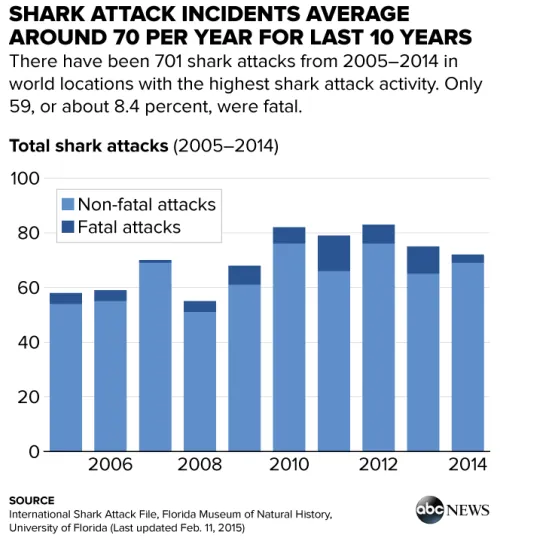
    Available at: https://abcnews.go.com/US/shark-attacks-told-graphs/story?id=31779076.

    According to the text, it is correct to state that

    Alternativas da questão 3171820
  9. Questão 749

    ID 3171819

    Disciplina: Língua Inglesa

    Assunto: Ciência e Tecnologia | Science And Technology

    Ano: 2023 Banca: SSPM - Serviço de Seleção do Pessoal da Marinha Órgão: Colégio Naval


    Read the sentence and choose the best option to complete the gaps.

    "________ from the University of Bem in Switzerland have shown that it is possible to leam new______ while we are sleeping ______"

    Taken from:

    < https://breakingnewsenglish.com/1902/190206-learningvocabulary.html>

    Alternativas da questão 3171819
  10. Questão 750

    ID 3171818

    Disciplina: Língua Inglesa

    Assunto: Interpretação de Texto | Text Interpretation

    Ano: 2023 Banca: VUNESP - Fundação para o Vestibular da Universidade Estadual Paulista Órgão: Companhia de Informática de Jundiaí


    Leia o texto para responder às questões de números 21 a 30.

    Information Security (InfoSec) defined

    Information security, often abbreviated InfoSec, is a set of security procedures and tools that broadly protect sensitive enterprise information from misuse, unauthorized access, disruption, or destruction. InfoSec encompasses physical and environmental security, access control, and cybersecurity. It often includes technologies like cloud access security brokers (CASB), deception tools, endpoint detection and response (EDR), and security testing for DevOps (DevSecOps), among others.

    Key elements of information security

    InfoSec comprises a range of security tools, solutions, and processes that keep enterprise information secure across devices and locations, helping to protect against cyberattacks or other disruptive events.

    • Application security - Policies, procedures, tools, and best practices enacted to protect applications and their data.w

    • Cloud security - Policies, procedures, tools, and best practices enacted to protect all aspects of the cloud, including systems, data, applications, and infrastructure.

    • Cryptography - An algorithm-based method of securing communication meant to ensure only intended recipients of a specific message can view and decipher it.

    • Disaster recovery - A method to reestablish functional technological systems in the wake of an event like a natural disaster, cyberattack, or another disruptive event.

    • Incident response - An organization’s plan for responding to, remediating, and managing the aftermath of a cyberattack, data breach, or another disruptive event.

    • Infrastructure security - Security that encompasses an organization’s entire technological infrastructure, including both hardware and software systems.

    • Vulnerability management - The process an organization takes to identify, assess, and remediate vulnerabilities in its endpoints, software, and systems.

    Three pillars of information security: the CIA triad

    Confidentiality, integrity, and availability make up the cornerstones of strong information protection, creating the basis for an enterprise’s security infrastructure. The CIA triad offers these three concepts as guiding principles for implementing an InfoSec plan.

    Confidentiality

    Privacy is a major component of InfoSec, and organizations should enact measures that allow only authorized users access to information. Data encryption, multi-factor authentication, and data loss prevention are some of the tools enterprises can employ to help ensure data confidentiality.

    Integrity

    Enterprises must maintain data’s integrity across its entire lifecycle. Enterprises with strong InfoSec will recognize the importance of accurate, reliable data, and permit no unauthorized user to access, alter, or otherwise interfere with it. Tools like file permissions, identity management, and user access controls help ensure data integrity.

    Availability

    InfoSec involves consistently maintaining physical hardware and regularly completing system upgrades to guarantee that authorized users have dependable, consistent access to data as they need it.

    (www.microsoft.com/en-ww/security/business/security-101/ what-is-information-security-infosec#:~:text=Information%20 security%2C%20often%20abbreviated%20(InfoSec,access%2C%20 disruption%2C%20or%20destruction. Adaptado.)

    Leia a parte do texto Key elements of information security para responder às questões de números 24 a 26.


    Os termos que evidenciam a diferença entre os objetivos de “Disaster recovery” e de “Incident response” são, respectivamente,

    Alternativas da questão 3171818
  11. Questão 751

    ID 3171817

    Disciplina: Língua Inglesa

    Assunto: Plural dos Substantivos | Plural Of Nouns

    Ano: 2023 Banca: VUNESP - Fundação para o Vestibular da Universidade Estadual Paulista Órgão: Prefeitura Municipal de São José do Rio Preto


    Leia o excerto para responder às questões de números 27 a 31.

    English as a Lingua Franca (ELF)

    The reality of Global or World English(es) has caused some people to become very interested in what actually happens when it is used as a lingua franca – that is between two people who do not share the same language and for whom English is not their mother tongue. A number of researchers have studied such conversations. In particular Barbara Seidlhofer at the University of Vienna has noted a number of somewhat surprising characteristics, including:

    • Non-use of third person present simple tense – s (She look very sad).

    • Interchangeable use of relative pronouns who and which (A book who, a person which).

    • Omission of definite and indefinite articles where they are obligatory in native speaker English, and insertion where they do not occur in native English. • Use of an all-purpose tag-question, such as “isn’t it? Or no?”

    • Heavy reliance on some verbs of high semantic generality, such as “do, have, make, put, take”.

    • Pluralisation of nouns which are considered uncountable in native speaker English (informations, staffs, advices).

    Something interesting is happening here. Whereas, as Jennifer Jenkins (2006, p.171) points out ‘… the belief in native-speaker ownership persists among both native and non-native speakers’, the evidence suggests that non-native speakers are not conforming to a native English standard. Indeed, they seem to get along perfectly well despite the fact that they miss things out and put things in which they ‘should not do’. Not only this, but they are better at ‘accommodating’ – that is negotiating shared meaning through helping each other in a more cooperative way (…)

    (Harmer, Jeremy. The changing world of English. In. Harmer, Jeremy. The practice of English language teaching. 4th edition. 2007)


    Regarding the item “pluralisation of nouns”, which of the alternatives shows an uncountable word incorrectly used in the plural form?

    Alternativas da questão 3171817
  12. Questão 752

    ID 3171816

    Disciplina: Língua Inglesa

    Assunto: Condição | Condition

    Ano: 2023 Banca: VUNESP - Fundação para o Vestibular da Universidade Estadual Paulista Órgão: Escola de Formação Complementar do Exército


    Na frase “in situations where students are expected to learn English as an additional language”, a palavra destacada em negrito pode ser corretamente substituída por:

    Alternativas da questão 3171816
  13. Questão 753

    ID 3171815

    Disciplina: Língua Inglesa

    Assunto: Sinônimos | Synonyms

    Ano: 2023 Banca: IADES - Instituto Americano de Desenvolvimento Órgão: Instituto Rio Branco


    Text to answer questions from 36 to 39.

    1 OVER the past four centuries liberalism has been so

    successful that it has driven all its opponents off the

    battlefield. Now it is disintegrating, destroyed by a mix of

    4 hubris and internal contradictions, as professor Patrick

    Deneen claims in his recently published work Why

    Liberalism Failed.

    7 The gathering wreckage of liberalism’s twilight years

    can be seen all around, especially in America, Mr Deneen’s

    main focus. The founding tenets of the faith have been

    10 shattered. Equality of opportunity has produced a new

    meritocratic aristocracy that has all the aloofness of the old

    aristocracy with none of its sense of noblesse oblige.

    13 Democracy has degenerated into a theatre of the absurd.

    And technological advances are reducing ever more areas

    of work into meaningless drudgery. “The gap between

    16 liberalism’s claims about itself and the lived reality of the

    citizenry” is now so wide that “the lie can no longer be

    accepted,” Mr Deneen writes. What better proof of this

    19 than the vision of 1,000 private planes whisking their

    occupants to Davos to discuss the question of “creating a

    shared future in a fragmented world”?

    22 Mr Deneen uses the term “liberalism” in its

    philosophical rather than its popular sense. He is describing

    the great tradition of political theory that is commonly

    25 traced to Thomas Hobbes and John Locke rather than the

    set of vaguely leftish attitudes that Americans now

    associate with the word. But this is no work of

    28 philosophical cud-chewing. Most political theorists argue

    that liberalism has divided into two independent streams:

    classical liberalism, which celebrates the free market, and

    31 left-liberalism which celebrates civil rights. For Mr Deneen

    they have an underlying unity. Most political observers

    think that the debate about the state of liberalism has

    34 nothing to do with them. Mr Deneen argues that liberalism

    is a ruling philosophy, dictating everything from court

    decisions to corporate behaviour. Theory is practice.

    37 The underlying unity lies in individual self-

    expression. Both classical and left liberals conceive of

    humans as rights-bearing individuals who should be given

    40 as much space as possible to fulfil their dreams. The aim of

    government is to secure rights. The legitimacy of the

    system is based on a shared belief in a “social contract”

    43 between consenting adults. But this produces a paradox.

    Because the liberal spirit mechanically destroys inherited

    customs and local traditions, sometimes in the name of

    46 market efficiency and sometimes in the name of individual

    rights, it creates more room for the expansion of the state,

    48 as marketmaker and law-enforcer.

    In: Political thought: the problem with liberalism.

    The Economist, Edição impressa, p. 74, 27 jan. 2018.

    As far as comprehension of the text above is concerned, mark the statements below as right (C) or wrong (E).


    “Wreckage” (line 7) is synonymous with “speed”.

    Alternativas da questão 3171815
  14. Questão 754

    ID 3171814

    Disciplina: Língua Inglesa

    Assunto: Consequência | Consequence

    Ano: 2023 Banca: FUVEST - Fundação Universitária para o Vestibular da USP Órgão: Universidade de São Paulo


    TEXTO PARA AS QUESTÕES 76 E 77

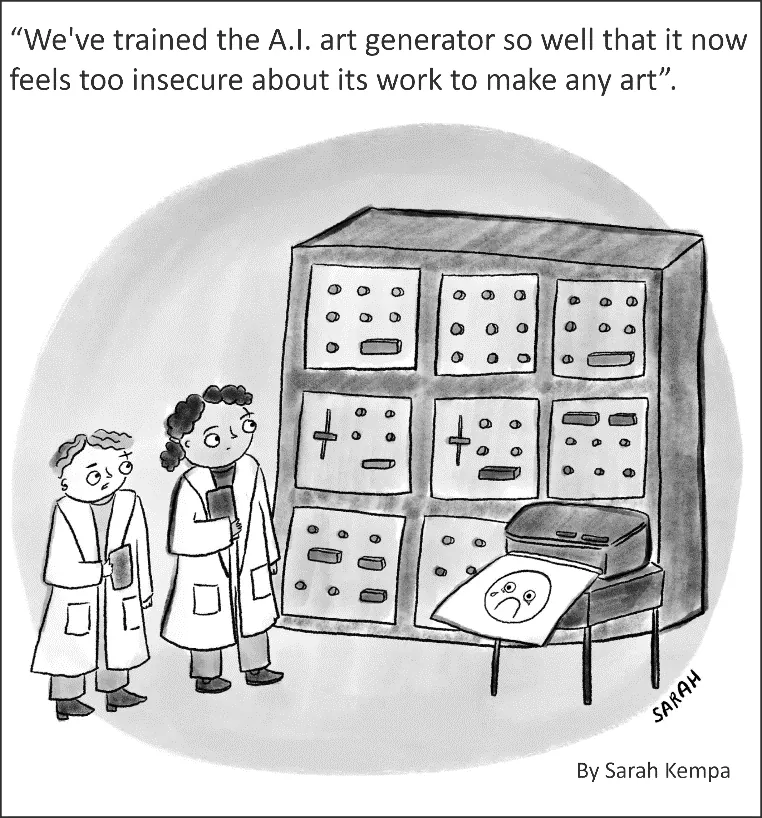
    Considere a charge de Sarah Kempa:

    Revista New Yorker. 11/01/ 2023


    Considerando o segmento "so well that", depreende-se que o termo "that" introduz ideia de

    Alternativas da questão 3171814
  15. Questão 755

    ID 3171813

    Disciplina: Língua Inglesa

    Assunto: Referência em Textos | Reference Words

    Ano: 2023 Banca: FUNDATEC - Fundação Universidade Empresa de Tecnologia e Ciências Órgão: Prefeitura Municipal de Vista Gaúcha


    The Last Beatles Song

    1. Almost 50 years since Lennon recorded the earliest version of “Now and Then”, fans will
    2. soon be able to hear the last ever Beatles song. One final, stirring encore from the four Scousers
    3. who changed music forever. Working alongside “Get Back” director Peter Jackson’s team, the final
    4. version is due for worldwide release on Thursday 2 November. But as many Beatles fans will know,
    5. today’s gift is yesterday’s curse. The story of its release is a complicated saga in which only Paul
    6. McCartney and Ringo Starr will ever get to enjoy these last, bittersweet fruits of their labor, once
    7. John Lennon and George Harrison have passed.
    8. Despite Lennon having announced his intentions to quit the band in 1969, the Fab Four
    9. didn’t officially split until five years later. Lennon composed “Now and Then” in 1978, two years
    10. before he was shot and fatally wounded. Recording it using a boombox, he added it to a cassette
    11. tape labeled “For Paul”, which his widow Yoko Ono gave to McCartney when she found it among
    12. his possessions in 1994. The remaining Beatles released two of the songs on the cassette – “Free
    13. as a Bird” and “Real Love” – shortly after, aided by producer Jeff Lynne. But despite their attempts
    14. in 1995 to work on a version of “Now and Then”, they were forced to shelve the project due to the
    15. poor quality of the recording.
    16. Around two decades later, Jackson (best known for his epic fantasy trilogies “The Lord of
    17. the Rings” and “The Hobbit”) and dialogue editor Emile de la Rey were working on “The Beatles:
    18. Get Back docuseries”, using cutting-edge technology developed by his studio, WingNut Films, to
    19. de-mix the film’s mono soundtrack. This way, it became possible to separate the individual voices
    20. and unearth conversations that had previously never been heard before. McCartney wondered,
    21. could the same be achieved with the shelved recording he had long considered unfinished
    22. business?
    23. Jackson, de la Rey, and a dedicated sound team got to work, applying the same technique
    24. to separate Lennon’s vocal performance from the piano, while maintaining the integrity and clarity
    25. of the original recording. “There it was, John’s voice, crystal clear,” McCartney says, of the moment
    26. he heard Lennon’s clean vocals for the first time. “It’s quite emotional. And we all play on it, it’s a
    27. genuine Beatles recording. In 2023, to still be working on Beatles music, and about to release a
    28. new song the public haven’t heard, I think it’s an exciting thing.” He and Starr completed the song
    29. last year. “It was the closest we’ll ever come to having him back in the room so it was very
    30. emotional for all of us,” Starr says. “It was like John was there, you know. It’s far out.”
    31. This final chapter of The Beatles’ recorded history will also be marked by two collections —
    32. The Beatles’ 1962-1966 (The Red Album) and The Beatles 1967-1970 (The Blue Album). The
    33. release of “Now and Then” will be preceded by a 12-minute documentary, scheduled for a global
    34. premiere __ The Beatles’ YouTube channel __ 1 November __ 7.30 pm. The short film tells the
    35. full story behind the making of the song, and features exclusive footage __ McCartney, Starr,
    36. Harrison, Jackson, and Sean Lennon, who’s John’s son. The official music video will then be
    37. debuted __ Friday 3 November. “It was incredibly touching to hear them working together after
    38. all the years that dad had been gone. It’s the last song my dad, Paul, George and Ringo got to
    39. make together,” Sean Lennon says. “It’s like a time capsule and all feels very meant to be.”

    (Available in: https://www.independent.co.uk/arts-entertainment/music/news/last-beatles-song-now-and-then-john-lennon-b2436396.html – text especially adapted for this test)


    What do the words “its” (l. 05), “which” (l. 05), “these” (l. 06), and “their” (l. 06) refer to, respectively?

    Alternativas da questão 3171813
  16. Questão 756

    ID 3171812

    Disciplina: Língua Inglesa

    Assunto: Contraste | Contrast

    Ano: 2023 Banca: UNESC - UNIVERSIDADE DO EXTREMO SUL CATARINENSE Órgão: Prefeitura Municipal de Braço do Norte


    O texto seguinte servirá de base para responder às questões de 11 a 22.

    Archaeological Areas of Pompei, Herculaneum and Torre Annunziata

    (1º§) The World Heritage property includes three different archaeological areas: the ancient towns of Pompeii and Herculaneum together with the Villa of the Mysteries (to the west of Pompeii) and the Villa of the Papyri (to the west of Herculaneum), and the Villa A (Villa of Poppaea) and Villa B (Villa of Lucius Crassius Tertius) in Torre Annunziata. The vast expanse of the commercial town of Pompeii contrasts with the smaller but better-preserved remains of the smaller Herculaneum, while Villa A in Torre Annunziata gives a vivid impression of the opulent lifestyle enjoyed by the wealthier citizens of the early Roman Empire.

    (2º§) When Vesuvius erupted in 79 AD, it engulfed the two flourishing Roman towns of Pompeii and Herculaneum, as well as the many wealthy countryside villas in the area. Pompeii was buried largely by a thick layer of volcanic ash and lapilli and Herculaneum disappeared under pyroclastic surges and flows. These sites have been progressively excavated and made accessible to the public since the mid-18th century. However, in the case of Herculaneum large areas of the ancient town still lie under the modern town and have only been explored and surveyed by the network of 18th-century tunnels that drew the attention of Grand Tour visitors, the basis still today for visiting the Herculaneum's underground ancient theatre. These areas are mostly not currently included in the World Heritage property.

    (3º§) Pompeii, with its well-preserved buildings in an excavated area of 44 ha, is the only archaeological site in the world that provides a complete picture of an ancient Roman city. The main forum is flanked by a number of imposing public buildings, such as the Capitolium, the Basilica and temples and within the city there are also many public bath complexes, two theatres and an amphitheatre.

    (4º§) In Herculaneum several impressive public buildings are well preserved, including a spacious palaestra accessed through a monumental gateway, two sets of public baths, one of which (Central Thermae) is monumental and vividly decorated, the College of the Priests of Augustus, and a theatre of standard form. The Villa of the Papyri, outside the city walls, is an opulent establishment. The town is also noteworthy for the completeness of its shops, still containing equipment such as enormous wine jars.

    (5º§) Herculaneum's urban districts and seafront display a higher level of preservation with noteworthy conservation of upper floors thanks to the pyroclastic material that buried the town. Organic matter was often carbonized by the high temperatures and exceptionally preserved finds include everyday objects such as foodstuffs, architectural elements and wooden furniture.

    (6º§) Both Pompeii and Herculaneum are renowned for their remarkable series of residential and commercial buildings, built along well-paved streets. The earliest is the atrium house, entirely inward-looking with a courtyard at its centre: the House of the Surgeon at Pompeii is a good example. Under Hellenistic influences, this type of house was enlarged and decorated with columns and arcades and equipped with large representative rooms. In its highest form, this type of Roman house, known from towns all over the Empire, developed into a veritable mansion, richly decorated and with many rooms, of which the House of the Faun and the House of the Chaste Lovers are outstanding examples.

    (7º§) The suburban villas across the Vesuvian area are perhaps even more exceptional in terms of the scale of their buildings and grounds, as well as their lavish decorations. The Villa of the Mysteries is an enormous residence just outside Pompeii's city walls, developed from a modest house built in the 3rd century BC, named from the remarkable wall paintings in the triclinium, which depict the initiation rites ('mysteries') of the cult of Dionysus.

    (8º§) The two villas in Torre Annunziata are both extraordinary examples of suburban buildings in the countryside of Pompeii. The villa A, so-called "of Poppaea", is a huge maritime residence built in the middle of the 1st century BCE, enlarged during the Imperial period and under restoration at the moment of the eruption. It is especially well known for its magnificent and well-preserved wall paintings, one of the most important examples of Roman painting with their superb illusionistic frescos of doors, colonnades and garden views. On the other hand, villa B is an excellent example of villa rustica provided with rooms and spaces designated for market activities such as storage of amphoras and trading of locally produced foodstuffs, especially wine.

    (9º§) There were many changes to these buildings over time in response to changing circumstances of the owners; these include repairs and adjustments that were a response to the seismic events that led up to the AD 79 eruption and reflect a community living with changing environmental and economic conditions.

    (10º§) A special feature of Pompeii is the wealth of graffiti on its walls. An election was imminent at the time of the eruption, and there are many political slogans scrawled on walls, as well as others of a more personal nature, often defamatory. At Herculaneum, the volcanic deposits preserved hundreds of wax tablets, some of which conserve legal documents, and more than 1,800 papyri scrolls containing Greek philosophical texts were found at the Villa of the Papyri.

    (11º§) The diverse range of literary sources available in Pompeii and Herculaneum provides a picture of the final decades of these ancient cities and the image of socially complex and dynamic communities, representing exceptional evidence of typical ways of life in Roman society in the first century AD and the importance of texts in political and private life.

    (12º§) Other important sources of archaeological evidence are the human remains of those who died in the eruption. Pompeii witnessed an early archaeological experiment when plaster was poured into voids found in the volcanic material and which allowed casts to be made of the forms of the human and animal victims and other organic material. At Herculaneum, on the other hand, about 300 skeletons were discovered along the ancient shoreline. The study of these significant samples of victims from the towns provides insight into their health, lifestyles and death and a chance to compare the two data sets. The casts themselves are important resources as they contain both skeletal remains and evidence of 19th- and 20th-century archaeological practice.

    (13º§) Another important legacy of the twentieth century was the presentation of Herculaneum to the public as an 'open-air museum', perhaps Europe's first, with buildings reconstructed based on archaeological evidence and displays of original objects within the archaeological site. This concept of 'open-air museum' had already been adopted in some buildings in Pompeii, as a medium to communicate the meaning of ancient spaces, at the end of the 19th century.

    (14º§) The impressive remains of the towns of Pompeii and Herculaneum and their associated villas, destroyed and yet preserved by Mount Vesuvius, provide a complete and vivid picture of society and daily life at a specific moment in the past that is unparalleled elsewhere. The rediscovery and history of these places as archaeological sites has captured the collective imagination century after century, shaping archaeological, art historical, conservation and interpretation practices in Europe and beyond.

    (adapted) https://whc.unesco.org/en/list/829/


    In the sentence "The vast expanse of the commercial town of Pompeii contrasts with the smaller but better-preserved remains of the smaller Herculaneum, [...] (1º§)" what syntactic structure is used to emphasize the difference between Pompeii and Herculaneum?

    Alternativas da questão 3171812
  17. Questão 757

    ID 3171811

    Disciplina: Língua Inglesa

    Assunto: Substituição de Palavras e Reescrita de Frases | Word Substitution And Sentence Rewriting

    Ano: 2023 Banca: FEPESE - Fundação de Estudos e Pesquisas Socioeconômicos Órgão: Prefeitura Municipal de Caxambu do Sul


    Generations

    Authors William Strauss and Neil Howe are known____________their theories about cycles___________ generations _____________American history. In their seminal Generations, and the subsequent 13th Gen, and The Fourth Turning, they explore the history of America_____________ 1584 to the present as a repeating cycle of 4 consecutive generational archetypes. They refer_____________ each cycle of four generations as a constellation, and they posit that each constellational era corresponds to “5 recurring types of historical events” and moods. They state that adjacent generations do not live similar lives, and that each generation ages as a singular cohort as time moves forward. If one were to place this progression on a graph, the line would form a diagonal – which Strauss and Howe call the “generational diagonal.” According to Strauss and Howe, each generation is comprised of people who possess: 1) common age, 2) common beliefs, and 3) perceived membership in the same generation. A generation is approximately 22 years in length. Since a lifetime may reach 80–90 years, members of 4 generations are alive at one time.

    The four generational archetypes identified by Strauss and Howe are Idealist, Reactive, Civic, and Adaptive. Idealists are “increasingly indulged youths after a secular crisis,” come of age “inspiring a spiritual awakening,” cultivate principle rather than practicality or pragmatism in midlife, and emerge as “visionary elders.” Reactives grow up “underprotected and criticized youths during a spiritual awakening,” mature into risk taking adults, unlike the preceding generation at midlife, mellow into “pragmatic midlife leaders during a secular crisis,” and become reclusive elders. Civics grow up “increasingly protected youths after a spiritual awakening,” become “a heroic and achieving cadre of young adults,” build institutions as midlifers, and “emerge as busy midlifers, attacked by the next spiritual awakening.” Adaptives grow up as “overprotected and suffocated youths during a secular crisis,” unlike the previous generation as young adults, become “risk-averse, conformist rising adults,” mature into “indecisive arbitrator leaders during a spiritual awakening,” and become sensitive elders.

    The authors believe that the archetypical generations have recurred in fixed order throughout American history with one exception: following the Civil War, one type did not appear. As each generational archetype shifts from one phase of life to the next, the succeeding generations line up in a predictably recurring pattern. For example, when the Idealists are elders, the Reactives are in midlife, the Civics are in rising adulthood, and the Adaptives are in youth.

    The central role of the elders, aged 66–87, is that of stewardship, such as supervising and mentoring. The central role of midlife, aged 44-65, is leadership, such as parenting and teaching. The central role of rising adulthood is activity, such as working and starting families. The central role of youth, aged 0 to 21 is dependence, such as growing and learning.


    According to the context, which of the following definitions is correct?

    Alternativas da questão 3171811
  18. Questão 758

    ID 3171810

    Disciplina: Língua Inglesa

    Assunto: Interpretação de Texto | Text Interpretation

    Ano: 2023 Banca: VUNESP - Fundação para o Vestibular da Universidade Estadual Paulista Órgão: Universidade Virtual de São Paulo


    Leia o texto e responda às questões de números 30 a 35.

    The twenties were strange and wonderful years in America. “The uncertainties of 1919 were over – there seemed little doubt about what was going to happen – America was going on the greatest, gaudiest spree in history.” These are the words of F. Scott Fitzgerald (1896-1940). Fitzgerald’s best books form a kind of spiritual history of the “Lost Generation” (a phrase first used by Gertrude Stein). Many young people in the post-World War I had ‘lost’ their American ideals. At the same time America ‘lost’ many fine young writers – like e.e. cummings and Hemingway – because they had moved to Paris.

    Ernest Hemingway was one of the writers who spoke for the lost generation. He drove an ambulance in WWI and then decided to become a writer. His first novel, The Sun Also Rises (1926), is a portrait of young adults living in the postwar era. The characters are young Americans living in Paris. Some have fought bravely for their country. But now they are completely useless in peacetime. Others in the novel are simply expatriates, people without a land.

    You´re an expatriate. You’ve lost touch with the

    soil. Fake European standards have ruined

    you. You drink yourself to death. You become obsessed

    by sex. You spend all your time talking. You’re an

    expatriate, you see? You hang around cafés.

    Without hope or ambition, they try to enjoy each day as it comes. All they want to know is how to live in the emptiness of the world. The typical Hemingway hero must always fight against the Nada (nothingness in Spanish) of the world. He must never give up trying to live life as fully as possible.

    (Peter High. Outline of American Literature. Essex, Longman. 1996. p. 146-7. Adaptado)


    The second and last paragraphs in Peter High’s text are basically in the simple present tense to

    Alternativas da questão 3171810
  19. Questão 759

    ID 3171809

    Disciplina: Língua Inglesa

    Assunto: Fonética e Pronúncia | Phonetics And Pronunciation

    Ano: 2023 Banca: IADES - Instituto Americano de Desenvolvimento Órgão: Secretaria de Estado de Educação do Distrito Federal


    1 George Orwell’s fiction has been prescient, invoked

    to describe the ills of nearly every age. 1984 has repeatedly

    topped English-language bestseller lists, including in 1954

    4 (the year the BBC did a television adaptation), 1984 and

    2003 (the centenary of Orwell’s birth). Political events bring

    Orwell new readers, including Donald Trump’s inauguration

    7 in 2017 and fomenting of the riot at America’s Capitol in

    2021. After Russia’s invasion of Ukraine last year, 1984

    became the most-downloaded electronic fiction book in

    10 Russia. It is thus no surprise that in 2023, with fears of

    autocracy and intense culture wars, the man who wrote so

    12 skilfully about dark subjects is back in the spotlight.

    Interest in George Orwell and his dystopian fiction is high. The Economist. August 4th 2023. https://www.economist.com/culture/2023/08/04/interest-in-george-orwel-land-his-dystopian-fiction-is-high

    Based on the text and considering phonological aspects of the English language, judge the following items.


    The “-ed” ending in “invoked” (line 1) and “topped” (line 3) is pronounced the same way.

    Alternativas da questão 3171809
  20. Questão 760

    ID 3171808

    Disciplina: Língua Inglesa

    Assunto: Interpretação de Texto | Text Interpretation

    Ano: 2023 Banca: QUADRIX - Instituto Quadrix Órgão: Conselho Regional de Medicina do Tocantins


    Text for the items from 31 to 37.

    1 Health technology is defined by the World

    Health Organization as the “application of organized

    knowledge and skills in the form of devices, medicines,

    4 vaccines, procedures, and systems developed to solve

    a health problem and improve quality of lives”. This

    includes pharmaceuticals, devices, procedures, and

    organizational systems used in the healthcare industry, as

    well as computer‑supported information systems.

    Internet:<http://www.en.wikipedia.org/> (with adaptations).

    According to the text, judge the items from 31 to 35.


    Computer‑supported information systems are used in the healthcare industry with less effectiveness than the others resources mentioned in the text.

    Alternativas da questão 3171808
Pular para o conteúdo principal