Banco de Questões

A ferramenta completa para a sua preparação em concursos

Questões de Língua Inglesa

35.421 questões encontradas

  1. Questão 501

    ID 3172067

    Disciplina: Língua Inglesa

    Assunto: Artigo Definido | Definite Article

    Ano: 2023 Banca: FUNDATEC - Fundação Universidade Empresa de Tecnologia e Ciências Órgão: Instituto Federal Catarinense


    Analyse the following sentences:

    _____ Earth goes round ______ sun.

    There’s ______ lift on his building, so he doesn’t mind living on _______ tenth floor.

    There are millions of stars in ________ space.

    Mark the alternative that correctly and respectively fills the blancks:

    Alternativas da questão 3172067
  2. Questão 502

    ID 3172066

    Disciplina: Língua Inglesa

    Assunto: Interpretação de Texto | Text Interpretation

    Ano: 2023 Banca: Objetiva Concursos Órgão: Prefeitura Municipal de Novo Itacolomi


    Life just might exist on Mars after all

    The red planet may have once been home to an abundance of microbes. New studies suggest it's possible that some hardy microbes managed to survive underground in a frozen state.

    About 3.5 billion years ago, two of the planets that orbited the sun may have had biospheres of similar bulk. One, Earth, evolved in a way that allowed life to flourish and splinter into endless forms most beautiful. Mars, the other world, followed a different path.

    Today the Martian surface is hostile to life as we know it, but as this scientific story goes, Mars may have once hosted a rich abundance of microbes. Residing in the planet’s briny underworld and shielded from the lethal radiation that bathes the surface, these organisms could have grown in nooks and ____________, multiplying until their collective heft rivaled Earth’s cache of life. Called methanogens, Mars’s microbes would have inhaled atmospheric hydrogen and carbon dioxide and exhaled methane gas - and in a twist, they may have turned out to be their own worst enemy.

    Over time, their growing, insatiable appetite would have robbed the Martian atmosphere of hydrogen - a powerful greenhouse gas during the planet’s early days - ultimately casting a deadly freeze over the planet and driving microbial populations into deeper, warmer crannies. How long those burrowing microbes could have survived in the deep is unknown. It’s possible they were only a shortlived flash of life on an otherwise sterile world.

    “Maybe extinction is the cosmic default of life in the universe,” says Boris Sauterey of the Institut de Biologie de l’Ecole Normale Supérieure in Paris. “It’s not the process of life ____________ that is limiting; it’s life maintaining itself that is limiting.”

    But perhaps, more than 30 feet beneath the surface and encased in ice, these ancient single-celled organisms achieved a state of dormancy - a sort of cryopreserved slumber, ready to perk up when more life-friendly conditions arise.

    The Martian interior may not be as lifeless as its face. It could host a world of alien organisms that are capable of waiting thousands of years between each turn of their metabolic engines.

    This ____________ may sound farfetched, but recent results from scientists modeling the habitability of ancient Mars and studying the hardiness of microbes in labs and beneath our own planet’s surface all point in the same direction: It’s a long shot, but it’s possible life evolved on Mars and still exists. And scientists may just find signs of that life when meteors barrel into Mars and excavate buried layers of ice, or when new spacecraft arrive to plumb this underground realm.

    (Fonte: National Geographic - adaptado.)


    According to the text, mark the CORRECT alternative:

    Alternativas da questão 3172066
  3. Questão 503

    ID 3172065

    Disciplina: Língua Inglesa

    Assunto: Interpretação de Texto | Text Interpretation

    Ano: 2023 Banca: IBGP - Instituto Brasileiro de Gestão e Pesquisa Órgão: Corpo de Bombeiros Militar de Minas Gerais


    Instruction: For questions 31, 32 and 33, read the passage below.

    How to become a firefighter

    Those who fight fires are trained to do their job anywhere – from forests to rural areas to urban high-rises. Firefighters work first and foremost to protect lives, and then they turn their attention to protecting property. Some firefighters choose to work their way up the ladder, so to speak, starting with volunteer work at their local firehouse, coupled with their high school diploma. Those who want to advance up the ranks faster can turn to a fire science degree that will prepare them for responsibilities at the state or federal level. Understanding different types of firefighting careers and what each entails is the first step to choosing the right path.

    What Does a Firefighter Do?

    Firefighters show up at the scene of a fire or emergency and rely on advanced tools and equipment to handle the situation.

    That's a very broad overview; now let's get down to the details.

    Firefighter Careers Basics

    Firefighters receive expert training that prepares them to handle a variety of emergency situations. Though fighting fires are what they are best known for (as the name implies), firefighters also handle medical emergencies, rescuing and treating the injured, educating the public and more. Their work often requires them to be on call at all hours; some respond to calls from their private homes, while others stay in the firehouse during their shifts in order to respond to calls much faster, especially in urban areas.

    Availabe in: https://www.learnhowtobecome.org/firefighter/. Access in: 11/10/2022.


    It is CORRECT to say that the main objective of the text is to:

    Alternativas da questão 3172065
  4. Questão 504

    ID 3172064

    Disciplina: Língua Inglesa

    Assunto: Outros | Others

    Ano: 2023 Banca: Avança SP - Instituto Avança São Paulo Órgão: Prefeitura Municipal de Americana


    Assinale a alternativa com palavras que apresentam o símbolo /ε/.

    Alternativas da questão 3172064
  5. Questão 505

    ID 3172063

    Disciplina: Língua Inglesa

    Assunto: Metodologias e Abordagens de Ensino | Teaching Methods And Approaches

    Ano: 2023 Banca: IBFC - Instituto Brasileiro de Formação e Capacitação Órgão: Secretaria da Educação do Estado da Bahia


    Leia a afirmativa a seguiir e assinale a alternativa que apresenta a qual estratégia ela se refere: “A estratégia de supor e adivinhar, levantar hipóteses e confirmá-las ou não. O contexto e o próprio texto fornecem informações para o esclarecimento do significado de uma palavra, observe as palavras anteriores e posteriores. Também é útil quando há a necessidade da percepção das ideias que não estão evidentes no texto, naquelas ocasiões em que há a necessidade de ler nas entrelinhas”. (SOUZA, 2005, P.46)

    Alternativas da questão 3172063
  6. Questão 506

    ID 3172062

    Disciplina: Língua Inglesa

    Assunto: Sinônimos | Synonyms

    Ano: 2023 Banca: FGV - Fundação Getúlio Vargas Órgão: Prefeitura Municipal de Jaboatão dos Guararapes


    Read Text I and answer the questions that follow it

    Text I

    What is English as a Lingua Franca?

    ‘English’, as a language, has for some time been seen as a global phenomenon and, therefore, as no longer defined by fixed territorial, cultural and social functions. At the same time, people using English around the world have been shaping it and adapting it to their contexts of use and have made it relevant to their socio-cultural settings. English as a Lingua Franca, or ELF for short, is a field of research interest that was born out of this tension between the global and the local, and it originally began as a ramification of the World Englishes framework in order to address the international, or, rather, transnational perspective on English in the world. The field of ELF very quickly took on a nature of its own in its attempt to address the communication, attitudes, ideologies in transnational contexts, which go beyond the national categorisations of World Englishes (such as descriptions of Nigerian English, Malaysian English and other national varieties). ELF research, therefore, has built on World Englishes research by focusing on the diversity of English, albeit from more transnational, intercultural and multilingual perspectives.

    ELF is an intercultural medium of communication used among people from different socio-cultural and linguistic backgrounds, and usually among people from different first languages. Although it is possible that many people who use ELF have learnt it formally as a foreign language, at school or in an educational institution, the emphasis is on using rather than on learning. And this is a fundamental difference between ELF and English as a Foreign Language, or EFL, whereby people learn English to assimilate to or emulate native speakers. In ELF, instead, speakers are considered language users in their own right, and not failed native speakers or deficient learners of English. Some examples of typical ELF contexts may include communication among a group of neuroscientists, from, say, Belgium, Brazil and Russia, at an international conference on neuroscience, discussing their work in English, or an international call concerning a business project between Chinese and German business experts, or a group of migrants from Syria, Ethiopia and Iraq discussing their migration documents and requirements in English. The use of English will of course depend on the linguistic profile of the participants in these contexts, and they may have another common language at their disposal (other than English), but today ELF is the most common medium of intercultural communication, especially in transnational contexts.

    So, research in ELF pertains to roughly the same area of research as English as a contact language and English sociolinguistics. However, the initial impetus to conducting research in ELF originated from a pedagogical rationale – it seemed irrelevant and unrealistic to expect learners of English around the world to conform to native norms, British or American, or even to new English national varieties, which would be only suitable to certain socio-cultural and geographical locations. So, people from Brazil, France, Russia, Mozambique, or others around the world, would not need to acquire the norms originated and relevant to British or American English speakers, but could orientate themselves towards more appropriate and relevant ways of using English, or ELF. Researchers called for “closing a conceptual gap” between descriptions of native English varieties and new empirical and analytical approaches to English in the world. With the compilation of a number of corpora, ELF empirical research started to explore how English is developing, emerging and changing in its international uses around the world. Since the empirical corpus work started, research has expanded beyond the pedagogical aim, to include explorations of communication in different domains of expertise (professional, academic, etc.) and in relation to other concepts and research, such as culture, ideology and identity.

    Adapted from https://www.gold.ac.uk/glits-e/ back-issues/english-as-a-lingua-franca/


    “Instead” in “In ELF, instead, speakers are considered language users” (2nd paragraph) can be replaced without change of meaning by

    Alternativas da questão 3172062
  7. Questão 507

    ID 3172061

    Disciplina: Língua Inglesa

    Assunto: Interpretação de Texto | Text Interpretation

    Ano: 2023 Banca: FUVEST - Fundação Universitária para o Vestibular da USP Órgão: Universidade de São Paulo


    TEXTO PARA AS QUESTÕES 38 A 40

    “A Spiraling Loop of Feedbacks”: Worst-Case Scenario for Amazon Rainforest

    A paper to be published in the Journal Science on January 27 has found that humans have degraded more than one-third of the remaining trees in the Amazon rainforest. This degradation could eventually lead to "a spiraling loop of feedbacks," Jos Barlow, a professor of conservation science at Lancaster University in the U.K and co-author of the paper, told Newsweek.

    Up to 38 percent of the remaining Amazon has been affected by human actions, researchers from Brazil's University of Campinas (Unicamp), the Amazon Environmental Research Institute (IPAM), National Institute for Space Research (INPE), and Lancaster University found.

    The degradation of this area— equivalent to 5.5 times the size of the state of California —releases carbon emissions equivalent to or greater than those from deforestation.

    The Amazon contributes 16 percent of all the land-based photosynthesis in the world, and strongly regulates global carbon and water cycles, sucking in carbon dioxide and producing oxygen. Additionally, despite only covering around 0.5 percent of the Earth's surface, the Amazon is home to over 10 percent of all named plant and vertebrate species on Earth.

    "Healthy rainforests provide amazing habitat for biodiversity —this is what the Amazon is most famous for," Sally Thompson, an ecohydrologist at The University of Western Australia, told Newsweek. "They usually support clean water in rivers, make it rain, and cool the surrounding area. You can hunt, harvest timber or foods sustainably from healthy and wellmanaged forests. And a healthy forest can often recover from disturbance. Degraded forests aren't as good at doing any of those things, and often they struggle to recover from disturbance.”

    Deforestation involves a loss of the forest canopy and a change in land use (e.g., from forest to agriculture or urban land use), while degradation is a process affecting the remaining forests. Degradation essentially means that there is still forest in place but it is not as healthy or as good at providing benefits for the environment or for people.

    THOMSON, Jess. “A Spiraling Loop of Feedbacks”: Worst-Case Scenario for Amazon Rainforest. Newsweek (online), 26 jan. 2023 (adaptado).


    De acordo com o texto, a degradação e o desmatamento são processos diferentes, pois

    Alternativas da questão 3172061
  8. Questão 508

    ID 3172060

    Disciplina: Língua Inglesa

    Assunto: Interpretação de Texto | Text Interpretation

    Ano: 2023 Banca: CESPE CEBRASPE - Centro de Seleção e de Promoção de Eventos UnB Órgão: Conselho Nacional do Ministério Público


    Text CB2A2

    Anyone who has interacted with superbot ChatGPT or image generator DALL-E might be wondering what the future of artificial intelligence (AI) holds for humanity.

    ChatGPT is an AI program that generates text in a very human-like manner when asked questions. Just ask DALL-E or similar programs to create a picture of a French bulldog driving a pink convertible and voila: you’ll see several versions in seconds.

    Science fiction in the mid-20th century created good-natured AI such as the computer on Star Trek helping the Enterprise crew, as well as its evil twin set on destroying its creators like HAL in Arthur C. Clarke’s famous book (or Stanley Kubrick’s 1968 film adaptation) 2001: A Space Odyssey. In 2023, however, we’re surrounded by AI that’s far more mundane than those examples. The virtual assistant in your smartphone, the airline chatbot and the robot vacuum cleaning your floors don’t seem to have any aspirations to rise above humanity and have been designed to help us.

    We should be prepared for bigger things to come than games, better chatbots or photo generators. Connectivity is key: think of AI as a general-purpose innovation like electricity that powers and connects other technologies, including sensors, robots, genomic devices and 3D printers. AI’s use will only intensify and accelerate as faster computing technology is developed, along with greater sensors capturing data, often called the Internet of Things (IoT). In the future, AI will be interwoven in virtually every aspect of commercial and personal activities.

    Peter Marber. Artificial Intelligence: Why Should We Care?.

    Internet: <www.newsweek.com>(adapted).

    Judge the following items according to the information given in text CB2A2.


    There is an intrinsic relation between the speed of computers and the intensity of the use of AI.

    Alternativas da questão 3172060
  9. Questão 509

    ID 3172059

    Disciplina: Língua Inglesa

    Assunto: Can

    Ano: 2023 Banca: Fundação CESGRANRIO Órgão: Petrobras Transporte S/A


    Technology And Innovation:

    The Gateway To Development For Guyanese?

    1 We live in vulnerable energy times. The energy

    crisis, climate change and energy transition are all

    shaking and shaping the global future. “The energy

    realities of the world remind us that oil and gas will

    be here for decades to pivot a just, affordable and

    secure energy transition,” as John Hess, CEO of

    Hess Corporation, mentioned during the International

    Energy Conference and Expo in Guyana in February

    2023.

    2 As someone said, vulnerability is the birthplace

    of innovation and technology is the driving force

    behind progressive changes. Nevertheless, how can

    Guyana play a vital role in reordering energy security?

    “By embedding innovation earlier in the process,

    Guyana can skip several steps and avoid what most

    economies went through” this idea was emphasized

    several times during the same conference. “If we

    integrate innovation into Guyana’s process today,

    there might be some accelerated success.”

    3 Guyana can play an essential role in balancing

    the global energy supply and demand markets and

    address the energy crisis by becoming a top crude oil

    producer globally. The goal is to become competitive

    in the global oil and gas market and this can be

    achieved by attracting and establishing partnerships

    with companies that can bring increased efficiency

    and productivity to the local oil and gas operations,

    from exploration and production to storage and

    transportation. For Guyana, this means that

    improvements in regulations, a transparent, secure

    and competitive environment for foreign investment,

    and incentives from the government can serve as

    catalysts for technology and innovation.

    4 Collaborating with universities and creating

    a business innovation hub mentality for young

    entrepreneurs with government support, like loan

    guarantees, grants, and tax credits, will also spur the

    industry.

    5 Innovative technology will play a critical role in

    climate change. The oil and gas sector must reduce its

    emissions by at least 3.4 gigatons of CO2 equivalent a

    year by 2050 – a 90 % reduction in current emissions.

    Guyana today can become a world leader in setting

    a benchmark around flaring and it’s possible for the

    country to achieve zero-flare objective, because “from

    day one the right solutions and the right technologies

    were properly planned and properly positioned in

    order to enable the extraction and the production

    with almost zero carbon footprint”, as the Emissions

    Director at Schlumberger vocalized about a year ago.

    6 Innovations and technologies are key to the

    energy transition, from floating wind farms to solar

    photovoltaic farm developments, waste-to-fuel

    projects and green hydrogen, shaping Guyana’s

    energy transition and future. All this requires not

    only massive financial support but an innovation-

    oriented and technology-friendly environment, with a

    strong emphasis on education, training and research.

    Nevertheless, the decision in Guyana on what

    technologies to adopt and how much to innovate will

    have a big impact on results over the long term and

    the government should base it on a clear vision and

    roadmap.

    Available at: https://www.newsamericasnow.com/guyana-oil

    -technology-and-innovation-the-gate-way-to-development

    -caribbean-news/. Retrieved on: April 26, 2023. Adapted.


    In the fragment of paragraph 5 “Innovative technology will play a critical role in climate change”, the verb form will indicates
    Alternativas da questão 3172059
  10. Questão 510

    ID 3172058

    Disciplina: Língua Inglesa

    Assunto: Plural dos Substantivos | Plural Of Nouns

    Ano: 2023 Banca: Universidade Estadual do Ceará Órgão: Prefeitura Municipal de Sobral


    “All the world’s a stage,

    And all the men and women merely players;

    They have their exits and their entrances;

    And one man in his time plays many parts.” (William Shakespeare)

    Considering the rules for the formation of the plural of nouns in the English language and considering the tense of verbs, it is correct to state that, in these verses, the plural of the nouns falls into the category of ______ 1and the verbs are in the ______. 2

    Alternativas da questão 3172058
  11. Questão 511

    ID 3172057

    Disciplina: Língua Inglesa

    Assunto: Interpretação de Texto | Text Interpretation

    Ano: 2023 Banca: CRS PMMG - CRS - Polícia Militar de Minas Gerais Órgão: Polícia Militar de Minas Gerais


    Read the text below and answer the questions from 11 to 14

    Rice is a staple food for a large part of the world’s population, providing more than one fifth of the calories consumed worldwide, making it the second-most-consumed cereal grain. The rice plant grows about 2 to 5 feet high and is a flowering plant.

    Rice is composed of the grain and husk. The grain is mainly used as food, but the vitamins, including B-complex, are found in the husk. Most people prefer to eat polished rice without the husk, but this can create a vitamin deficiency because polished rice doesn’t have many vitamins.

    Much of the rice that we eat comes from southeastern Asia and grows in all countries that have a warm and moist climate, including India, China, and Japan. The traditional method for cultivating rice is to flood the fields after planting the seedlings. This simple method requires planning and maintenance of the water supply, but reduces the growth of weeds and deters vermin. Flooding is not mandatory, but all other methods of irrigation require more effort in weed and pest control and different methods of fertilization.

    COOK, Ann, Grammar: American Accent Training – 2009, Page 208.


    De acordo com as informações do primeiro parágrafo, qual das afirmativas está CORRETA?

    Alternativas da questão 3172057
  12. Questão 512

    ID 3172056

    Disciplina: Língua Inglesa

    Assunto: Interpretação de Texto | Text Interpretation

    Ano: 2023 Banca: CESPE CEBRASPE - Centro de Seleção e de Promoção de Eventos UnB Órgão: Serviço Federal de Processamento de Dados


    Data art is a form of digital art that uses data as a medium or source material to create visually appealing and meaningful representations. It often involves the use of algorithms, software, and technology to turn data into something that can be seen, such as a graph, chart, or animation. The goal is to convey emotions to the audience by sharing insights, patterns, or stories hidden within the data in an accessible and creative way. Data artist Kirell Benzi adds that, because it is based on data, the piece has a more objective truth behind its construction and does not solely come from the artist’s imagination.

    Still emerging, Data Art has nonetheless existed for decades. What stands it apart, from the other digital art categories, is the complex interaction between material, process, and expression.

    The artist Aaron Koblin once argued that “data can make us more human”. As part of a project to put this forward, he made Flight Patterns. The summary purpose explains it all: Interpreting a series of flight data and, once processed, a wide range of human behaviors appears. It is how we all flow through technology.

    Internet: <agoradigital.art> (adapted).

    Considering the information stated in the precedent text and the vocabulary used in it, judge the following items.


    Kirell Benzi questions the meaning of artistic objects constructed using data as a medium.

    Alternativas da questão 3172056
  13. Questão 513

    ID 3172055

    Disciplina: Língua Inglesa

    Assunto: Interpretação de Texto | Text Interpretation

    Ano: 2023 Banca: IBAM - Instituto Brasileiro de Administração Municipal Órgão: Prefeitura Municipal de Saquarema


    Scientists recently revealed an instinct in women intact and unaffected by age of technology. Glancing through glossy art books, Lee Salk noticed that four times out of five Mary is depicted holding the infant Jesus against her left breast. The Madonna sparked off a series of experiments and observations to determine on which side women hold their babies and why.

    First, he determined that modem mothers still tend to hold their baby on the left. Of 255 right-handed mothers, 83% held the baby on the left. And out of 32 left-handed women, 78% held the baby on the left too. As a control, women were watched emerging from supermarkets carrying baby-sized packages and the bundles were held with no side preference. Then, dental patients were given a large rubber ball to hold during treatment. The majority clutched the ball to their left side, even when it interfered with the dentist's activities. This suggested that in times of stress objects are held against the left side.

    At that point, an apparently contradictory phenomenon was observed: a large number of mothers who brought their premature babies to a follow-up clinic were seen to hold their babies against their right side. Then, 115 mothers who had been separated from their babies for 24 hours after birth were observed for also holding response. The experimenters presented the baby directly to the midline of the mother's body, and noted how she held the baby. 53% placed the baby on the left and 47%, on the right. And it was also noted that the mothers of the group who had held their baby on the left had already had a baby from which they had not been separated after birth.

    The author suggests that "the time immediately after birth is a critical period when the stimulus of holding the baby releases a certain maternal response". That is to say she senses the baby is better off on her left. Left-handed holding enables the baby to hear the heartbeat - a sound associated with security of the womb. In order to discover whether hearing the heart has a beneficial effect on the baby, the sound of a human heartbeat was played to 102 babies in New York nursery for 4 days. On the other hand, a control group of babies was not exposed to heartbeats. The babies in the beat group gained markedly more weight and cried far less than the babies in the control group.

    (Taken and adapted from Magazine Spare Rib)


    The women were watched coming out of supermarkets in order to see:

    Alternativas da questão 3172055
  14. Questão 514

    ID 3172054

    Disciplina: Língua Inglesa

    Assunto: Comparativo | Comparative

    Ano: 2023 Banca: FURB - Universidade de Blumenau Órgão: Universidade Regional de Blumenau


    Considere as afirmativas relacionadas ao assunto comparativo e superlativo. Assinale V para as corretas e F para as erradas:

    (__)The more you have, the more you want.

    (__)The more relaxed the child is, the less the vaccine will hurt

    (__)I want to by a bigger TV. The bigger, the best.

    Assinale a alternativa com a sequência correta:

    Alternativas da questão 3172054
  15. Questão 515

    ID 3172053

    Disciplina: Língua Inglesa

    Assunto: Defining Relative Clauses

    Ano: 2023 Banca: IBFC - Instituto Brasileiro de Formação e Capacitação Órgão: Secretaria da Educação do Estado da Bahia


    Leia o texto 1 para responder as questões que se seguem.

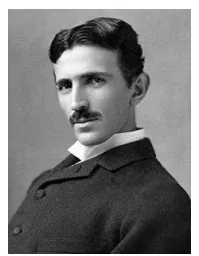
    Nikola Tesla biography

    (Disponível em https://www.biography.com/inventor/nikola-tesla)

    Nikola Tesla was an engineer and scientist known for designing the alternating-current (AC) electric system, which is the predominant electrical system used across the world today. He also created the "Tesla coil," which is still used in radio technology.

    Born (01) ______ modern day Croatia, Tesla came to the United States in 1884 and briefly worked with Thomas Edison before the two parted ways. He sold several patent rights, including those to his AC machinery, to George Westinghouse.

    Early Life

    Tesla was born in Smiljan, Croatia, on July 10, 1856.

    Tesla was one of five children, including (02) ______ Dane, Angelina, Milka and Marica. Tesla's interest in electrical invention was spurred by his mother, Djuka Mandic, who (03) ______ small household appliances in her spare time while her son was growing up.

    Observe a palavra em destaque: “Nikola Tesla was an engineer and scientist known for designing the alternating-current (AC) electric system, which is the predominant electrical system used across the world today”. “Which” é classificado como um pronome relativo, portanto, ele recupera uma ideia anteriormente exposta. Assinale a alternativa que contenha essa ideia.

    Alternativas da questão 3172053
  16. Questão 516

    ID 3172052

    Disciplina: Língua Inglesa

    Assunto: Interpretação de Texto | Text Interpretation

    Ano: 2023 Banca: SELECON - Instituto Nacional de Seleções e Concursos Órgão: Prefeitura Municipal de Nova Mutum


    Leia o texto a seguir:

    Top 10 Effective Methods of Teaching English

    Pallavi Pradeep Purbey

    Dec 5, 2022 |

    In the history of teaching languages, there are many teaching approaches and techniques, with some being more well-known and successful than others. Language teaching methods are reliant on and affected by various hypothesis of language learning. The historical backdrop of language teaching advances in multiple ways.

    There are a lot of methods of English teaching, and we've listed a few that are very famous and active methods.

    Grammar-cum-Translation Method

    The name itself explains the functionality of the grammar-cumtranslation method. The strategy of teaching English in grammar orientation depends on a ton of interpretation. The technique is the conventional or 'old style' method of learning a language. A few nations approach this teaching style. The fundamental thought behind this strategy is that the students become familiar with all grammar rules to translate various sentences easily.

    Many teachers recognize this technique as incapable since it does not include the spoken form of the language, and communication skills are ignored. Furthermore, it does not allow the learners to think directly in the target language. Thus, it hinders the creation of a direct link between thoughts and expression. Consequently, this technique doesn't improve the student's communicative ability in the language but only builds strong language writing skills.

    The Direct Method

    The Audio method is also known as the direct method, which involves thinking and speaking in English. Here the communication between the teacher and the student is strictly in English, and the student is barred from using their native language. This way, the student can get a stronghold on the accent and fluency, the frequency of grammatical errors in this would be less.

    This method is widely used as it helps the students learn the English language in a way a native English speaker would speak like and not the orthodox textbook way.

    The Audio-Lingual Method

    The audio-lingual method is also recognized as the Army Method. During the first world war, the American Armed forces started escalating oral courses known as the 'Military particular Training Program' (ASTP). Instructive organisations later received it as an audio-lingual method.

    The striking highlights of the audio-lingual method are:

    1. Language teaching starts with communication; the material is educated before it is offered in composed structure.
    2. The objective language is the study hall's main language; the student's primary language isn't utilised.
    3. The teacher is the role model for the student; student-tostudent interaction happens in chain drills.

    The army method is identified with the natural method. The most significant difference between the audio-lingual method and the natural method is its focal point of teaching. The natural method focuses on the learning of vocabulary, while the audio-lingual practice focuses on communication.

    Suggestopedia

    Suggestopedia is a behaviourist theory developed by Georgi Lozanov, the Bulgarian psychotherapist in the 1970s. The method involves using the environment, music, decoratives, etc., for learning the language.

    It depends a lot on the atmosphere and the physical environmental factors of the class. When teachers prepare to utilize the Suggestopedia method, there's a great deal of craftsmanship and music included. Each suggestopedia exercise is divided into three unique stages: Deciphering, Concert Session and Elaboration.

    The Silent Way

    The silent way leans mainly on the student's self-sufficiency. The teacher demonstrates only as a facilitator attempting to urge students to be more efficient in their learning. The fundamental of these lines of teaching is for the teacher to state practically nothing so that students can assume responsibility for their education.

    This learning method follows a basic schedule, grammar, vocabulary, and pronunciation continually drilled and reused for support. The teacher assesses their students through their mistakes, and they may never set a conventional test as students are urged to address their language blunders.

    Total Physical Response

    Total Physical Response, also called TPR, is a methodology that follows 'learning by doing. For example, apprentices will learn English through a series of activities, “Close the door”, “Stand up”, “Open your book”, and “Stroll to the window and open it.” With TPR, the most significant aptitude is aural perception, and everything else will be regular.

    Community Language Learning

    Community language learning is a language-teaching approach in which students cooperate to create what parts of a language they might want to learn. It depends on the counselling approach. CLL is most likely one of the English teaching methods where the student feels the most secure. There's an extraordinary accentuation on the relationship and bond between the student and teacher. In contrast to a ton of different methods and ways to deal with teaching English as a Second Language, a great deal of the native language is utilized for translation purposes.

    Communicative Language Teaching

    The thought behind this methodology is to assist students with conveying all the more successfully and effectively in sensible circumstances that they may wind up. Therefore, this teaching includes concentrating on important capacities like thanking, complaining, suggesting, inviting, and requesting directions to give some examples.

    Communicative Language Teaching has the following qualities:

    1. The point is to make the student achieve communicative capability, for example, utilizing language precisely and appropriately.
    2. Communicative Language Teaching underscores the elements of a language rather than the principles.
    3. Utilize techniques to energize student cooperation in typical habitats- information gap exercises, role-play, group, and pair work.

    Task-Based Learning

    Task-based language teaching is also called task-based instruction. The principal point of this way to deal with learning is task finishing. Typically, the teacher sets relevant and exciting tasks. Then, students are required to draw on their information in English to finish the job with as few mistakes as could be expected under the circumstances. Such assignments can incorporate visiting a specialist, directing a meeting, or calling customer care for help.

    Lexical Approach

    The lexical approach in language teaching looks to create a proposition for a schedule plan and language teaching established on a view of language in which lexis assumes a focal job.

    The Lexical approach depends on computer studies that have recently distinguished the most customarily utilized words. This approach in teaching centres around vocabulary is securing and teaching lexical lumps arranged by their recurrence and use. Teachers of the Lexical Approach place an extraordinary accentuation on bona fide materials and practical situations for increasingly important learning.

    Adapted from: https://www.getmyuni.com/articles/methods-of-teaching-english. Acesso em 10/01/2023


    Há um método de ensino no qual o estudante pode escolher temas de seu interesse, como expressões idiomáticas. A expressão idiomática que indica que algo seja feito de forma esporádica é:

    Alternativas da questão 3172052
  17. Questão 517

    ID 3172051

    Disciplina: Língua Inglesa

    Assunto: Tradução | Translation

    Ano: 2023 Banca: MS Concursos Órgão: Prefeitura Municipal de Turvelândia


    Na oração temos um exemplo de um enunciado discursivo sem uma tradução literal em inglês, já que, em inglês, não há o subjuntivo. Veja então a oração:

    “Se ela tiver tempo e dinheiro, fará uma viagem para o Egito.”

    Qual alternativa traduz corretação essa oração para o inglês?

    Alternativas da questão 3172051
  18. Questão 518

    ID 3172050

    Disciplina: Língua Inglesa

    Assunto: Fonética e Pronúncia | Phonetics And Pronunciation

    Ano: 2023 Banca: SELECON - Instituto Nacional de Seleções e Concursos Órgão: Prefeitura Municipal de Nova Mutum


    Leia o texto a seguir:

    Top 10 Effective Methods of Teaching English

    Pallavi Pradeep Purbey

    Dec 5, 2022 |

    In the history of teaching languages, there are many teaching approaches and techniques, with some being more well-known and successful than others. Language teaching methods are reliant on and affected by various hypothesis of language learning. The historical backdrop of language teaching advances in multiple ways.

    There are a lot of methods of English teaching, and we've listed a few that are very famous and active methods.

    Grammar-cum-Translation Method

    The name itself explains the functionality of the grammar-cumtranslation method. The strategy of teaching English in grammar orientation depends on a ton of interpretation. The technique is the conventional or 'old style' method of learning a language. A few nations approach this teaching style. The fundamental thought behind this strategy is that the students become familiar with all grammar rules to translate various sentences easily.

    Many teachers recognize this technique as incapable since it does not include the spoken form of the language, and communication skills are ignored. Furthermore, it does not allow the learners to think directly in the target language. Thus, it hinders the creation of a direct link between thoughts and expression. Consequently, this technique doesn't improve the student's communicative ability in the language but only builds strong language writing skills.

    The Direct Method

    The Audio method is also known as the direct method, which involves thinking and speaking in English. Here the communication between the teacher and the student is strictly in English, and the student is barred from using their native language. This way, the student can get a stronghold on the accent and fluency, the frequency of grammatical errors in this would be less.

    This method is widely used as it helps the students learn the English language in a way a native English speaker would speak like and not the orthodox textbook way.

    The Audio-Lingual Method

    The audio-lingual method is also recognized as the Army Method. During the first world war, the American Armed forces started escalating oral courses known as the 'Military particular Training Program' (ASTP). Instructive organisations later received it as an audio-lingual method.

    The striking highlights of the audio-lingual method are:

    1. Language teaching starts with communication; the material is educated before it is offered in composed structure.
    2. The objective language is the study hall's main language; the student's primary language isn't utilised.
    3. The teacher is the role model for the student; student-tostudent interaction happens in chain drills.

    The army method is identified with the natural method. The most significant difference between the audio-lingual method and the natural method is its focal point of teaching. The natural method focuses on the learning of vocabulary, while the audio-lingual practice focuses on communication.

    Suggestopedia

    Suggestopedia is a behaviourist theory developed by Georgi Lozanov, the Bulgarian psychotherapist in the 1970s. The method involves using the environment, music, decoratives, etc., for learning the language.

    It depends a lot on the atmosphere and the physical environmental factors of the class. When teachers prepare to utilize the Suggestopedia method, there's a great deal of craftsmanship and music included. Each suggestopedia exercise is divided into three unique stages: Deciphering, Concert Session and Elaboration.

    The Silent Way

    The silent way leans mainly on the student's self-sufficiency. The teacher demonstrates only as a facilitator attempting to urge students to be more efficient in their learning. The fundamental of these lines of teaching is for the teacher to state practically nothing so that students can assume responsibility for their education.

    This learning method follows a basic schedule, grammar, vocabulary, and pronunciation continually drilled and reused for support. The teacher assesses their students through their mistakes, and they may never set a conventional test as students are urged to address their language blunders.

    Total Physical Response

    Total Physical Response, also called TPR, is a methodology that follows 'learning by doing. For example, apprentices will learn English through a series of activities, “Close the door”, “Stand up”, “Open your book”, and “Stroll to the window and open it.” With TPR, the most significant aptitude is aural perception, and everything else will be regular.

    Community Language Learning

    Community language learning is a language-teaching approach in which students cooperate to create what parts of a language they might want to learn. It depends on the counselling approach. CLL is most likely one of the English teaching methods where the student feels the most secure. There's an extraordinary accentuation on the relationship and bond between the student and teacher. In contrast to a ton of different methods and ways to deal with teaching English as a Second Language, a great deal of the native language is utilized for translation purposes.

    Communicative Language Teaching

    The thought behind this methodology is to assist students with conveying all the more successfully and effectively in sensible circumstances that they may wind up. Therefore, this teaching includes concentrating on important capacities like thanking, complaining, suggesting, inviting, and requesting directions to give some examples.

    Communicative Language Teaching has the following qualities:

    1. The point is to make the student achieve communicative capability, for example, utilizing language precisely and appropriately.
    2. Communicative Language Teaching underscores the elements of a language rather than the principles.
    3. Utilize techniques to energize student cooperation in typical habitats- information gap exercises, role-play, group, and pair work.

    Task-Based Learning

    Task-based language teaching is also called task-based instruction. The principal point of this way to deal with learning is task finishing. Typically, the teacher sets relevant and exciting tasks. Then, students are required to draw on their information in English to finish the job with as few mistakes as could be expected under the circumstances. Such assignments can incorporate visiting a specialist, directing a meeting, or calling customer care for help.

    Lexical Approach

    The lexical approach in language teaching looks to create a proposition for a schedule plan and language teaching established on a view of language in which lexis assumes a focal job.

    The Lexical approach depends on computer studies that have recently distinguished the most customarily utilized words. This approach in teaching centres around vocabulary is securing and teaching lexical lumps arranged by their recurrence and use. Teachers of the Lexical Approach place an extraordinary accentuation on bona fide materials and practical situations for increasingly important learning.

    Adapted from: https://www.getmyuni.com/articles/methods-of-teaching-english. Acesso em 10/01/2023


    Dentre as palavras retiradas do texto, a que contém um schwa sound - / ə/ - é:

    Alternativas da questão 3172050
  19. Questão 519

    ID 3172049

    Disciplina: Língua Inglesa

    Assunto: Notícias e Artigos Jornalísticos | News Articles

    Ano: 2023 Banca: CESPE CEBRASPE - Centro de Seleção e de Promoção de Eventos UnB Órgão: Prefeitura Municipal do Recife


    Text 7A1

    Artificial intelligence still has difficulties processing requests in one language, without the additional complications of translation. Michael Housman, chief data science officer at RapportBoost.AI, explained that the ideal scenario for machine learning and artificial intelligence is something with fixed rules and a clear-cut measure of success or failure. He named chess as an obvious example. This happened faster than anyone anticipated because of the game’s very clear rules and limited set of moves. Housman elaborated, “Language is almost the opposite of that. There aren’t as clearly-cut and defined rules.”

    I asked Dr. Jorge Majfud, Associate Professor of Spanish, at Jacksonville University, to explain why consistently accurate language translation has thus far eluded AI. He replied, “The problem is that considering the ‘entire’ sentence is still not enough.” He noted that sarcasm and irony only make sense within this widened context. Similarly, idioms can be problematic for automated translations.

    Dr. Majfud warned, “We should be aware of the fragility of their ‘interpretation.’ Because to translate is basically to interpret, not just an idea but a feeling. Human feelings and ideas that only humans can understand — and sometimes not even we, humans, understand other humans.” He noted that cultures, gender, and even age can pose barriers to this understanding and also contended that an over-reliance on technology is leading to our cultural and political decline. Dr. Majfud mentioned that Argentinean writer Julio Cortázar used to refer to dictionaries as “cemeteries”. He suggested that automatic translators could be called “zombies”.

    David Pring-Mill. Why Hasn’t AI Mastered Language Translation?Internet: <singularityhub.com> (adapted)

    Based on text 7A1, judge the following items.


    Michael Housman explains that, for machines, it is easier to translate than to play chess.

    Alternativas da questão 3172049
  20. Questão 520

    ID 3172048

    Disciplina: Língua Inglesa

    Assunto: Interpretação de Texto | Text Interpretation

    Ano: 2023 Banca: FUNDATEC - Fundação Universidade Empresa de Tecnologia e Ciências Órgão: Banco Regional de Desenvolvimento do Extremo Sul


    Instruction: answer questions 13 to 19 based on the following text. The highlights throughout the text are cited in the questions.

    The Bizarre Story of the Swedish Warship “Vasa”

    01 Vasa was the world’s most high-tech warship when it set sail. Today, it’s a resource for

    02 naval historians and archaeologists – and a tale that haunts those who seek to design new

    03 technology. Despite being one of the Swedish navy’s biggest achievements, Vasa sank within

    04 twenty minutes of setting sail, on August 10, 1628. When it left Stockholm Harbor, the warship

    05 survived the first blast of wind it encountered, but not the second. The sinking took place nowhere

    06 near an enemy. In fact, it sank in full view of a horrified public, gathered to see off their navy’s –

    07 and Europe’s – most ambitious warship to date.

    08 Vasa was covered in wooden carvings that told stories about the Swedish royal family, and

    09 most importantly the king, Gustav II Adolf. It was the king who ordered the ship, which carried

    10 an unprecedented 64 bronze cannons. Soon after, an investigation concluded that the ship had

    11 been unstable, but the reasons behind the instability have remained a point of debate over the

    12 centuries. Archaeologists think it sank because the gun deck was far too heavy – the result of a

    13 design made by someone with no experience building such a well-armed ship. It didn’t help that

    14 the king rushed the building process.

    15 Although Vasa ___ (not work) out well for Gustav II Adolf, it’s a paradise for archaeologists:

    16 the cold, oxygen-poor water of the Baltic Sea ___ (protect) Vasa from the bacteria and worms

    17 that usually digest wooden wrecks, and perhaps 95 percent of Vasa’s wood ___ (be) intact when

    18 Sweden finally ___ (raise) the wreck in 1961. Now that the ship is stable, investigators have

    19 worked to uncover why it sank. The events of 1628 had such a big impact that the sinking is a

    20 case study business experts still read about. The management world has a name for human

    21 problems of communication and management that cause projects to founder and fail – Vasa

    22 syndrome. There was an overemphasis on the ship’s elegance and firepower and reduced

    23 importance on its seaworthiness and stability.

    24 The remains of the ship can be found in Stockholm’s Vasa Museum. According to the

    25 museum, it is the only preserved 17th-century ship in the world, and the museum is a place for

    26 historical and anthropological study as well as for visitors from around the globe.

    (Available at: https://www.smithsonianmag.com/smart-news/bizarre-story-vasa-ship-keeps-giving-180964328/ – text especially adapted for this test).


    Considering the context presented in the text, the sentence “The sinking took place nowhere near an enemy” (l. 05-06) suggests that the ship’s location in relation to an enemy was:

    Alternativas da questão 3172048
Pular para o conteúdo principal