Banco de Questões

A ferramenta completa para a sua preparação em concursos

Questões de Língua Inglesa

35.421 questões encontradas

  1. Questão 421

    ID 3172147

    Disciplina: Língua Inglesa

    Assunto: Interpretação de Texto | Text Interpretation

    Ano: 2023 Banca: FUNPAR NC UFPR - Universidade Federal do Paraná Órgão: Corpo de Bombeiro Militar do Paraná


    The following text is reference to questions 83 to 85.

    The Strange Saga of Jack Teixeira Reveals New Security Challenges

    Moments before his arrest by armed FBI agents on Thursday, a helicopter from a local news station caught footage of 21-year-old Jack Teixeira reading a book on the sun-splashed back porch of his house in North Dighton, Mass. In his front yard, meanwhile, FBI agents in camouflage tactical gear were climbing out of an armored vehicle, tightening the straps of their bullet-proof vests and gripping long guns. The dramatic scene playing out in a sleepy, riverside exurb underscored the peculiarity of a case that exposed military documents, complicated relations with U.S. allies, and triggered national embarrassment. Intelligence leaks of this magnitude in the past have been the result of an alienated whistle-blower, double agent or successful spy operation. Now arguably the most damaging disclosure of U.S. government documents in a decade may have stemmed from the hubris of a junior enlisted member in the Massachusetts Air National Guard who shared them in a small online chat group called Thug Shaker Central.

    Available in: https://time.com/6271787/jack-teixeira-arrest-leaks/.


    One of the reasons the FBI agents arrested Jack Teixeira was that he:

    Alternativas da questão 3172147
  2. Questão 422

    ID 3172146

    Disciplina: Língua Inglesa

    Assunto: Interpretação de Texto | Text Interpretation

    Ano: 2023 Banca: COPEVE/UFAL - FUNDEPES Órgão: Prefeitura Municipal de Penedo


    Better Now

    Post Malone

    You probably think that you are better now, better now

    You only say that 'cause I'm not around, not around

    You know I never meant to let you down, let you down

    Woulda gave you anything, woulda gave you everything

    You know I say that I am better now, better now

    I only say that 'cause you're not around, not around

    You know I never meant to let you down, let you down

    Woulda gave you anything, woulda gave you everything. [...]

    Disponível em: <https://www.vagalume.com.br/post-malone/better-now.html>.

    Acesso em: 21 mar. 2020.

    Todos os termos sublinhados no fragmento da música são

    Alternativas da questão 3172146
  3. Questão 423

    ID 3172145

    Disciplina: Língua Inglesa

    Assunto: Superlativo | Superlative

    Ano: 2023 Banca: JVL Concursos Órgão: Prefeitura Municipal de São José do Piauí


    Choose the CORRECT answer.

    “By far this is _________ car I’ve ever driven in my life.”

    Alternativas da questão 3172145
  4. Questão 424

    ID 3172144

    Disciplina: Língua Inglesa

    Assunto: Notícias e Artigos Jornalísticos | News Articles

    Ano: 2023 Banca: CRS PMMG - CRS - Polícia Militar de Minas Gerais Órgão: Polícia Militar de Minas Gerais


    Leia o trecho da matéria a seguir e responda a pergunta que segue:

    FBI Releases 2019 Crime Statistics

    For the third consecutive year, the estimated number of violent crimes in the nation decreased when compared with the previous year’s statistics, according to FBI figures released today. In 2019, violent crime was down 0.5% from the 2018 number. Property crimes also dropped 4.1%, marking the 17th consecutive year the collective estimates for these offenses declined. […]

    Fonte: https://www.fbi.gov/news/pressrel/press-releases/fbi-releases-2019-crime-statistics - September 28, 2020.

    Considerando as informações trazidas pelo texto, assinale a alternativa CORRETA:

    Alternativas da questão 3172144
  5. Questão 425

    ID 3172143

    Disciplina: Língua Inglesa

    Assunto: Interpretação de Texto | Text Interpretation

    Ano: 2023 Banca: CESPE CEBRASPE - Centro de Seleção e de Promoção de Eventos UnB Órgão: Secretaria de Planejamento, Orçamento e Administração


    Text CB1A2-I

    The quest for universal administrative standards to promote the effective application of public laws and policies gave birth to the field of public administration. Woodrow Wilson argued for a distinction between politics and administration, arguing that the former was more concerned with democracy, justice, and equality, while the latter was more concerned with efficiency, as he postulated that “administration lies beyond the proper domain of politics; administrative questions are not political questions” (Wilson, 1887).

    According to Waldo (1948), the means and measurements of efficiency were the same for all administrations: democracy, if it were to survive, could not afford to ignore the lessons of centralization, hierarchy and discipline. Bureaucracy as an organisational type has seen its heyday in the field of public administration, owing to Woodrow Wilson’s Transfer of Administrative Principles.

    That notwithstanding, the field has gone through paradigmatic evolution over time by a quest for management paradigm derived from the discipline of business administration. The management approach is said to hold the promise of future public sector reform, replacing the administrative approach traditionally provided by public administration. A new concept arises when the management perspective is combined with an emphasis on the public sector: public management.

    Courses and programmes, as well as whole academic institutions and colleges, are adapting by switching from the term “public administration” to “public management”. Considering the growing demands for efficiency in the public sector, the transition from a public administration to a public management framework seems to be the right step.

    M.O. Obimpeh and J.A. Dankwa. Public administration – public management interface: how different is the “management” from the “administration”? Internet: <www.rsisinternational.org > (adapted).


    According to text CB1A2-I, choose the option that refers correctly to Woodrow Wilson’s ideas concerning administration.

    Alternativas da questão 3172143
  6. Questão 426

    ID 3172142

    Disciplina: Língua Inglesa

    Assuntos: Quadrinhos, Tirinhas e Charges | Comic Strips And Cartoons

    Ano: 2023 Banca: VUNESP - Fundação para o Vestibular da Universidade Estadual Paulista Órgão: Prefeitura Municipal de Itapevi


    Leia o cartum.

    "Every yaer Hollywood makes tons of remakes and

    nobody bats an eye. I remake someone else's

    homework and now i'm here!"

    (https://andertoons.com)

    In the cartoon, the boy

    Alternativas da questão 3172142
  7. Questão 427

    ID 3172141

    Disciplina: Língua Inglesa

    Assunto: Second Conditional

    Ano: 2023 Banca: FUNDATEC - Fundação Universidade Empresa de Tecnologia e Ciências Órgão: Prefeitura Municipal de Maçambara


    Instruction: answer questions 26 to 36 based on the following text. The highlights throughout the text are cited in the questions.

    Try these expert tips for a safer solo trip

    1. Traveling alone may seem overwhelming, but it doesn’t have to be. Before you go, research
    2. travel warnings or advisories from government websites or destination-specific forums for
    3. travelers’ advice. Dig deeper if there is a warning or advisory. “Some countries like Mexico get
    4. a bad rap, but not all parts are dangerous,” says Janice Waugh, founder of the website Solo
    5. Traveler. Plan arrivals for the daytime, so you don’t land in a new city when you’re sleepy.
    6. Arrange your first two days’ accommodations, transportation, and tours, because this alleviates
    7. stress.
    8. Be “street smart:” Only wear one earbud in order to stay aware of your surroundings — and
    9. never sacrifice safety to save a buck. When going for a walk, ask for route advice: “Your host or
    10. a local shop owner will know if there’s a neighborhood to avoid,” Waugh says. For buses and
    11. trains, stick to daytime hours, and sit near the driver. If you take a cab, call a company directly
    12. so you don’t take a pirate one on the streets. Before getting in an app driver’s car, confirm the
    13. license plate and ask the driver to state your name. Invest in a smartphone case with a wrist
    14. strap, and also take note of your phone’s IMEI number — this helps police trace the phone if
    15. stolen. Use a VPN (virtual private network) for protecting sensitive info while online banking.
    16. Don’t walk around with your passport; carry a copy instead. Don’t carry much cash, and stick
    17. to small bills divided among your wallet, backpack, and pocket. Bring just one credit and one
    18. debit card, and make sure you snap a photo of each and store them in your email.
    19. For safe travels, keeping in touch is priority number one. Oneika Raymond, founder of
    20. Oneika the Traveller, brings a phone not tied to a service and buys a local SIM card. Also
    21. download the TripWhistle Global SOS app, which calls the equivalent of 911 wherever you are
    22. in an emergency. Raymond also creates a shareable document with her itinerary and gives loved
    23. ones access to the file. At the bar, chat up with the bartender — it helps to let him or her know
    24. you’re alone if you need help — and obviously, refrain from drinking too much. Party rules also
    25. apply: Never leave your drinks unattended or accept them from strangers. If you connect with from strangers. If you connect with
    26. someone, make plans for the next day in public rather than leaving with them. And always have
    27. a game plan for getting home.
    28. When looking for an Airbnb accommodation, filter by Superhosts and scan the reviews. Enter
    29. keywords like “neighborhood” or “safe” into the reviews search field of a listing to read guests’
    30. comments about the area and property. Complete your Airbnb profile and include emergency
    31. contact info. Check with your Host often, ask plenty of questions prior to booking, and stay in
    32. touch within the app so there’s a trail. If issues arise, alert Airbnb in the app ASAP.
    33. Our travelers’ best advice:
    34. - “Madrid, Barcelona, and Seville are great for first-time solo travelers because the people
    35. there are outgoing, and they’re well-traveled places.” (Groffman)
    36. - “If lost, don’t show ignorance, fear, or vulnerability. Instead, approach someone right away
    37. who looks knowledgeable and confidently ask where you need to go.” (Raymond)
    38. - “If you need to enlist the help of strangers, your first choice should be a family, followed
    39. by a couple, a woman, and last, a man.” (Waugh)

    (Available at: https://news.airbnb.com/try-these-expert-tips-for-a-safer-solo-trip/ – text especially adapted for this text).


    Which of the sentences below shows the excerpt “If you connect with someone, make plans for the next day” (l. 25-26) correctly rewritten in the second conditional structure?

    Alternativas da questão 3172141
  8. Questão 428

    ID 3172140

    Disciplina: Língua Inglesa

    Assunto: Metodologias e Abordagens de Ensino | Teaching Methods And Approaches

    Ano: 2023 Banca: FURB - Universidade de Blumenau Órgão: Prefeitura Municipal de Florianópolis


    Plurilingualism and translanguaging: commonalities and divergences

    Both plurilingual and translanguaging pedagogical practices in the education of language minoritized students remain controversial, for schools have a monolingual and monoglossic tradition that is hard to disrupt, even when the disrupting stance brings success to learners. At issue is the national identity that schools are supposed to develop in their students, and the Eurocentric system of knowledge, circulated through standardized named languages, that continues to impose what Quijano (2000) has called a coloniality of power.

    All theories emerge from a place, an experience, a time, and a position, and in this case, plurilingualism and translanguaging have developed, as we have seen, from different loci of enunciation. But concepts do not remain static in a time and place, as educators and researchers take them up, as they travel, and as educators develop alternative practices. Thus, plurilingual and translanguaging pedagogical practices sometimes look the same, and sometimes they even have the same practical goals. For example, educators who say they use plurilingual pedagogical practices might insist on developing bilingual identities, and not solely use plurilingualism as a scaffold. And educators who claim to use translanguaging pedagogical practices sometimes use them only as a scaffold to the dominant language, not grasping its potential. In the United States, translanguaging pedagogies are often used in English-as-a-Second Language programs only as a scaffold. And although the potential for translanguaging is more likely to be found in bilingual education programs, this is also at times elusive. The potential is curtailed, for example, by the strict language allocation policies that have accompanied the growth of dual language education programs in the last decade in the USA, which come close to the neoliberal understanding of multilingualism espoused in the European Union.

    It is important to keep the conceptual distinctions between plurilingualism and translanguaging at the forefront as we develop ways of enacting them in practice, even when pedagogies may turn out to look the same. Because the theoretical stance of translanguaging brings forth and affirms dynamic multilingual realities, it offers the potential to transform minoritized communities sense of self that the concept of plurilingualism may not always do. The purpose of translanguaging could be transformative of socio-political and socio-educational structures that legitimize the language hierarchies that exclude minoritized bilingual students and the epistemological understandings that render them invisible. In its theoretical formulation, translanguaging disrupts the concept of named languages and the power hierarchies in which languages are positioned. But the issue for the future is whether school authorities will allow translanguaging to achieve its potential, or whether it will silence it as simply another kind of scaffold. To the degree that educators act on translanguaging with political intent, it will continue to crack some openings and to open opportunities for bilingual students. Otherwise, the present conceptual differences between plurilingualism and translanguaging will be erased.

    Source: GARCÍA, Ofelia; OTHEGUY, Ricardo. Plurilingualism and translanguaging: Commonalities and divergences. International Journal of Bilingual Education and Bilingualism, v. 23, n. 1, p. 17-35, 2020.

    Garcia e Otheguy (2020)


    Match the second column according to the first:

    First column: topic

    1.Translanguaging

    2.Língua Franca

    3.CLIL

    Second column: summarized definition

    (__) is a common, global, language used as a means of communication.

    (__)is an educational approach where subjects are taught in a language that is not the students' native language to improve language proficiency while learning the content.

    (__)is a pedagogical approach that encourages using multiple languages and language varieties to enhance learning and communication, allowing students to draw from their full linguistic repertoire.

    Select the option that presents the correct association between the columns:

    Alternativas da questão 3172140
  9. Questão 429

    ID 3172139

    Disciplina: Língua Inglesa

    Assunto: Scientific article

    Ano: 2023 Banca: FUVEST - Fundação Universitária para o Vestibular da USP Órgão: Universidade de São Paulo


    TEXTO PARA AS QUESTÕES 04 A 06

    Generic catastrophic poverty when selfish investors exploit a degradable common resource

    Game theory deals with situations in which a number of agents compete with each other, with each participant trying to maximize his or her own profit individually. One speaks of a "Nash equilibrium” if players cannot increase their returns further. The "Tragedy of the Commons" is a game theoretical scenario in which the actors do not compete directly, but indirectly: If someone takes a piece of a common pie, there will be less for everybody else.

    Instead of investigating how to avoid the "Tragedy of the Commons," Claudius Gros from Goethe University's Institute for Theoretical Physics examined the resulting Nash equilibrium, with unexpected results: If a common good is divided more or less equally among N interested parties, then each receives a share of the order 1/N. However, the respective investment costs still need to be deducted.

    Gros' calculations show that, in equilibrium, the actors increase their engagement until the resulting investment costs almost reach the value of the resources the individual investor can secure for her- or himself. Mathematically, the theoretical physicist was able to show that the final profit of the individual investor scales as 1/N2.

    The original expectation, that investors each receive a proportional share from the resource, remains correct, as Gros' research shows. However, this does not translate into an overall return of the same proportion, which is smaller by a power in the number of investors. Gros denotes the dramatic deterioration of the net profit as "catastrophic poverty," as it implies that unregulated competition drives the individual actor close to the profitability limit, viz to the subsistence level.

    Similarly, Gros was able to show that catastrophic poverty can be avoided when the actors cooperate with each other. Cooperation leads to a net profit corresponding to the number of investors in simple power, the classical result.

    The result of the investigations is therefore that the "Tragedy of the Commons" can cause substantially more damage than previously assumed. Uncontrolled access not only leads to a potentially excessive exploitation of the resource, a topic that has been the focus of many previous studies. In addition, investors suffer themselves when only maximizing their own profits.

    GROS, Claudius. Generic catastrophic poverty when selfish investors exploit a degradable common resource. Royal Society Open Science (online), 08 Fev. 2023 (adaptado)


    Segundo o estudo, a “Tragédia dos Comuns” pode trazer mais prejuízos do que aqueles considerados inicialmente e pode levar aos seguintes efeitos:

    Alternativas da questão 3172139
  10. Questão 430

    ID 3172138

    Disciplina: Língua Inglesa

    Assunto: Metodologias e Abordagens de Ensino | Teaching Methods And Approaches

    Ano: 2023 Banca: SELECON - Instituto Nacional de Seleções e Concursos Órgão: Prefeitura Municipal de Nova Mutum


    Leia o texto a seguir:

    Top 10 Effective Methods of Teaching English

    Pallavi Pradeep Purbey

    Dec 5, 2022 |

    In the history of teaching languages, there are many teaching approaches and techniques, with some being more well-known and successful than others. Language teaching methods are reliant on and affected by various hypothesis of language learning. The historical backdrop of language teaching advances in multiple ways.

    There are a lot of methods of English teaching, and we've listed a few that are very famous and active methods.

    Grammar-cum-Translation Method

    The name itself explains the functionality of the grammar-cumtranslation method. The strategy of teaching English in grammar orientation depends on a ton of interpretation. The technique is the conventional or 'old style' method of learning a language. A few nations approach this teaching style. The fundamental thought behind this strategy is that the students become familiar with all grammar rules to translate various sentences easily.

    Many teachers recognize this technique as incapable since it does not include the spoken form of the language, and communication skills are ignored. Furthermore, it does not allow the learners to think directly in the target language. Thus, it hinders the creation of a direct link between thoughts and expression. Consequently, this technique doesn't improve the student's communicative ability in the language but only builds strong language writing skills.

    The Direct Method

    The Audio method is also known as the direct method, which involves thinking and speaking in English. Here the communication between the teacher and the student is strictly in English, and the student is barred from using their native language. This way, the student can get a stronghold on the accent and fluency, the frequency of grammatical errors in this would be less.

    This method is widely used as it helps the students learn the English language in a way a native English speaker would speak like and not the orthodox textbook way.

    The Audio-Lingual Method

    The audio-lingual method is also recognized as the Army Method. During the first world war, the American Armed forces started escalating oral courses known as the 'Military particular Training Program' (ASTP). Instructive organisations later received it as an audio-lingual method.

    The striking highlights of the audio-lingual method are:

    1. Language teaching starts with communication; the material is educated before it is offered in composed structure.
    2. The objective language is the study hall's main language; the student's primary language isn't utilised.
    3. The teacher is the role model for the student; student-tostudent interaction happens in chain drills.

    The army method is identified with the natural method. The most significant difference between the audio-lingual method and the natural method is its focal point of teaching. The natural method focuses on the learning of vocabulary, while the audio-lingual practice focuses on communication.

    Suggestopedia

    Suggestopedia is a behaviourist theory developed by Georgi Lozanov, the Bulgarian psychotherapist in the 1970s. The method involves using the environment, music, decoratives, etc., for learning the language.

    It depends a lot on the atmosphere and the physical environmental factors of the class. When teachers prepare to utilize the Suggestopedia method, there's a great deal of craftsmanship and music included. Each suggestopedia exercise is divided into three unique stages: Deciphering, Concert Session and Elaboration.

    The Silent Way

    The silent way leans mainly on the student's self-sufficiency. The teacher demonstrates only as a facilitator attempting to urge students to be more efficient in their learning. The fundamental of these lines of teaching is for the teacher to state practically nothing so that students can assume responsibility for their education.

    This learning method follows a basic schedule, grammar, vocabulary, and pronunciation continually drilled and reused for support. The teacher assesses their students through their mistakes, and they may never set a conventional test as students are urged to address their language blunders.

    Total Physical Response

    Total Physical Response, also called TPR, is a methodology that follows 'learning by doing. For example, apprentices will learn English through a series of activities, “Close the door”, “Stand up”, “Open your book”, and “Stroll to the window and open it.” With TPR, the most significant aptitude is aural perception, and everything else will be regular.

    Community Language Learning

    Community language learning is a language-teaching approach in which students cooperate to create what parts of a language they might want to learn. It depends on the counselling approach. CLL is most likely one of the English teaching methods where the student feels the most secure. There's an extraordinary accentuation on the relationship and bond between the student and teacher. In contrast to a ton of different methods and ways to deal with teaching English as a Second Language, a great deal of the native language is utilized for translation purposes.

    Communicative Language Teaching

    The thought behind this methodology is to assist students with conveying all the more successfully and effectively in sensible circumstances that they may wind up. Therefore, this teaching includes concentrating on important capacities like thanking, complaining, suggesting, inviting, and requesting directions to give some examples.

    Communicative Language Teaching has the following qualities:

    1. The point is to make the student achieve communicative capability, for example, utilizing language precisely and appropriately.
    2. Communicative Language Teaching underscores the elements of a language rather than the principles.
    3. Utilize techniques to energize student cooperation in typical habitats- information gap exercises, role-play, group, and pair work.

    Task-Based Learning

    Task-based language teaching is also called task-based instruction. The principal point of this way to deal with learning is task finishing. Typically, the teacher sets relevant and exciting tasks. Then, students are required to draw on their information in English to finish the job with as few mistakes as could be expected under the circumstances. Such assignments can incorporate visiting a specialist, directing a meeting, or calling customer care for help.

    Lexical Approach

    The lexical approach in language teaching looks to create a proposition for a schedule plan and language teaching established on a view of language in which lexis assumes a focal job.

    The Lexical approach depends on computer studies that have recently distinguished the most customarily utilized words. This approach in teaching centres around vocabulary is securing and teaching lexical lumps arranged by their recurrence and use. Teachers of the Lexical Approach place an extraordinary accentuation on bona fide materials and practical situations for increasingly important learning.

    Adapted from: https://www.getmyuni.com/articles/methods-of-teaching-english. Acesso em 10/01/2023


    O método de ensino de Inglês segundo o qual o estudante pode escolher aquilo que deseja aprender, proporcionando-lhe um maior sentimento de segurança é:

    Alternativas da questão 3172138
  11. Questão 431

    ID 3172137

    Disciplina: Língua Inglesa

    Assunto: Artigo Indefinido | Indefinite Article

    Ano: 2023 Banca: FUNDATEC - Fundação Universidade Empresa de Tecnologia e Ciências Órgão: Prefeitura Municipal de Nova Santa Rita - PI


    Instruction: Answer questions 29 to 36 based on the following text. The highlights throughout the text are cited in the questions.

    Watch your back! Idioms with the word ‘back’

    01 There are __ extraordinary number of phrases containing the word ‘back’, and some use

    02 ‘back’ in the sense of __ part of __ body. Several phrases make use of the idea that if someone

    03 is behind you, you can’t see them so you don’t know what they are doing. For example, if you do

    04 something behind someone’s back, you do it without them knowing about it. Similarly, if you do

    05 something while someone’s back is turned, you do it when they are not able to see or notice you:

    06 His staff started whispering about him behind his back. / As soon as her back was turned, we

    07 crept out of the room.

    08 The idea of not being able to see what is behind you also features in some phrases to do

    09 with possible danger or harm. For instance, if someone tells you to watch your back, they mean

    10 that you should be careful because people around you may harm you, either physically or in

    11 other ways. If you cover your back, you make sure you can’t be blamed or criticized for something

    12 at a later time and if someone you trusted stabs you in the back, they harm you when you do not

    13 deserve it: You need to watch your back because you’ve upset lots of people around here. / I sent

    14 the documents to my boss, just to cover my back. / When my friend told my parents my secret,

    15 I felt she’d stabbed me in the back.

    16 Informally, if someone is on your back, they are constantly criticizing you or forcing you to

    17 do things, but if you get someone off your back, you manage to stop them from behaving this

    18 way. If you have your back to the wall, you have some very serious problems and you don’t have

    19 many options about what you can do: My parents are always on my back about getting a job. / I

    20 gave him the money just to get him off my back. / She didn’t want to fire her employees but she

    21 had her back to the wall.

    22 To finish this list, here are two nice phrases. First, if you say that you could do something

    23 with one arm/hand tied behind your back, you mean that it is very easy. And second, you scratch

    24 my back and I’ll scratch yours means that you will help someone if they help you: My mum could

    25 make a cake like that with one arm tied behind her back. / There are plenty of ways we can help

    26 each other. You scratch my back and I’ll scratch yours.

    (Available at: https://dictionaryblog.cambridge.org/2023/03/01/watch-your-back-idioms-with-the-word-back/ – text especially adapted for this test).


    Choose the alternative that best fills the blanks in lines 01 and 02 (two occurences), respectively. Consider the en dash (–) if no article is necessary.

    Alternativas da questão 3172137
  12. Questão 432

    ID 3172136

    Disciplina: Língua Inglesa

    Assunto: Sinônimos | Synonyms

    Ano: 2023 Banca: FUVEST - Fundação Universitária para o Vestibular da USP Órgão: Universidade de São Paulo


    TEXTO PARA AS QUESTÕES 33 E 34.

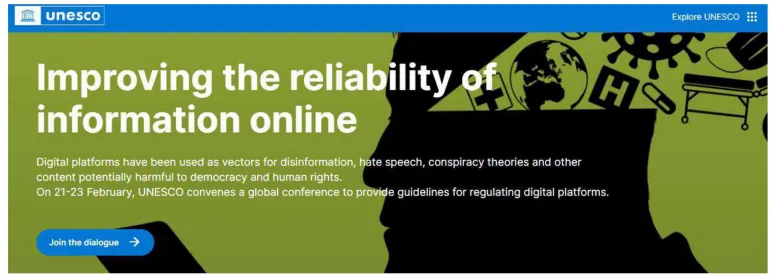
    Observe o seguinte cartaz.

    Disponível em www.unesco.org.


    No trecho “content potentially harmful to democracy and human rights”, o termo sublinhado pode ser substituído, sem prejuízo de sentido, por

    Alternativas da questão 3172136
  13. Questão 433

    ID 3172135

    Disciplina: Língua Inglesa

    Assunto: Coesão e Coerência | Cohesion And Coherence

    Ano: 2023 Banca: FURB - Universidade de Blumenau Órgão: Prefeitura Municipal de Florianópolis


    Plurilingualism and translanguaging: commonalities and divergences

    Both plurilingual and translanguaging pedagogical practices in the education of language minoritized students remain controversial, for schools have a monolingual and monoglossic tradition that is hard to disrupt, even when the disrupting stance brings success to learners. At issue is the national identity that schools are supposed to develop in their students, and the Eurocentric system of knowledge, circulated through standardized named languages, that continues to impose what Quijano (2000) has called a coloniality of power.

    All theories emerge from a place, an experience, a time, and a position, and in this case, plurilingualism and translanguaging have developed, as we have seen, from different loci of enunciation. But concepts do not remain static in a time and place, as educators and researchers take them up, as they travel, and as educators develop alternative practices. Thus, plurilingual and translanguaging pedagogical practices sometimes look the same, and sometimes they even have the same practical goals. For example, educators who say they use plurilingual pedagogical practices might insist on developing bilingual identities, and not solely use plurilingualism as a scaffold. And educators who claim to use translanguaging pedagogical practices sometimes use them only as a scaffold to the dominant language, not grasping its potential. In the United States, translanguaging pedagogies are often used in English-as-a-Second Language programs only as a scaffold. And although the potential for translanguaging is more likely to be found in bilingual education programs, this is also at times elusive. The potential is curtailed, for example, by the strict language allocation policies that have accompanied the growth of dual language education programs in the last decade in the USA, which come close to the neoliberal understanding of multilingualism espoused in the European Union.

    It is important to keep the conceptual distinctions between plurilingualism and translanguaging at the forefront as we develop ways of enacting them in practice, even when pedagogies may turn out to look the same. Because the theoretical stance of translanguaging brings forth and affirms dynamic multilingual realities, it offers the potential to transform minoritized communities sense of self that the concept of plurilingualism may not always do. The purpose of translanguaging could be transformative of socio-political and socio-educational structures that legitimize the language hierarchies that exclude minoritized bilingual students and the epistemological understandings that render them invisible. In its theoretical formulation, translanguaging disrupts the concept of named languages and the power hierarchies in which languages are positioned. But the issue for the future is whether school authorities will allow translanguaging to achieve its potential, or whether it will silence it as simply another kind of scaffold. To the degree that educators act on translanguaging with political intent, it will continue to crack some openings and to open opportunities for bilingual students. Otherwise, the present conceptual differences between plurilingualism and translanguaging will be erased.

    Source: GARCÍA, Ofelia; OTHEGUY, Ricardo. Plurilingualism and translanguaging: Commonalities and divergences. International Journal of Bilingual Education and Bilingualism, v. 23, n. 1, p. 17-35, 2020.

    Garcia e Otheguy (2020)


    Read three statements about English as a língua franca (ELF). Write T, for true statements, and F, for false ones:

    (__)ELF does not adhere to any specific native English dialect or accent but encompasses a wide range of English varieties, making it a flexible and adaptable form of communication.

    (__)ELF is a phenomenon where English is used as a common means of communication between speakers of different native languages, often in international or multicultural settings.

    (__)ELF is predominantly restricted to academic and formal contexts, such as international conferences, and is rarely used in informal, everyday interactions between non-native English speakers.

    Select the alternative with the correct sequence:

    Alternativas da questão 3172135
  14. Questão 434

    ID 3172134

    Disciplina: Língua Inglesa

    Assunto: Compreensão e Produção Oral | Listening And Speaking

    Ano: 2023 Banca: FURB - Universidade de Blumenau Órgão: Prefeitura Municipal de Florianópolis


    Plurilingualism and translanguaging: commonalities and divergences

    Both plurilingual and translanguaging pedagogical practices in the education of language minoritized students remain controversial, for schools have a monolingual and monoglossic tradition that is hard to disrupt, even when the disrupting stance brings success to learners. At issue is the national identity that schools are supposed to develop in their students, and the Eurocentric system of knowledge, circulated through standardized named languages, that continues to impose what Quijano (2000) has called a coloniality of power.

    All theories emerge from a place, an experience, a time, and a position, and in this case, plurilingualism and translanguaging have developed, as we have seen, from different loci of enunciation. But concepts do not remain static in a time and place, as educators and researchers take them up, as they travel, and as educators develop alternative practices. Thus, plurilingual and translanguaging pedagogical practices sometimes look the same, and sometimes they even have the same practical goals. For example, educators who say they use plurilingual pedagogical practices might insist on developing bilingual identities, and not solely use plurilingualism as a scaffold. And educators who claim to use translanguaging pedagogical practices sometimes use them only as a scaffold to the dominant language, not grasping its potential. In the United States, translanguaging pedagogies are often used in English-as-a-Second Language programs only as a scaffold. And although the potential for translanguaging is more likely to be found in bilingual education programs, this is also at times elusive. The potential is curtailed, for example, by the strict language allocation policies that have accompanied the growth of dual language education programs in the last decade in the USA, which come close to the neoliberal understanding of multilingualism espoused in the European Union.

    It is important to keep the conceptual distinctions between plurilingualism and translanguaging at the forefront as we develop ways of enacting them in practice, even when pedagogies may turn out to look the same. Because the theoretical stance of translanguaging brings forth and affirms dynamic multilingual realities, it offers the potential to transform minoritized communities sense of self that the concept of plurilingualism may not always do. The purpose of translanguaging could be transformative of socio-political and socio-educational structures that legitimize the language hierarchies that exclude minoritized bilingual students and the epistemological understandings that render them invisible. In its theoretical formulation, translanguaging disrupts the concept of named languages and the power hierarchies in which languages are positioned. But the issue for the future is whether school authorities will allow translanguaging to achieve its potential, or whether it will silence it as simply another kind of scaffold. To the degree that educators act on translanguaging with political intent, it will continue to crack some openings and to open opportunities for bilingual students. Otherwise, the present conceptual differences between plurilingualism and translanguaging will be erased.

    Source: GARCÍA, Ofelia; OTHEGUY, Ricardo. Plurilingualism and translanguaging: Commonalities and divergences. International Journal of Bilingual Education and Bilingualism, v. 23, n. 1, p. 17-35, 2020.

    Garcia e Otheguy (2020)


    In TESOL (Teaching English to Speakers of Other Languages) classes, students develop their language skills through various activities: they enhance their listening abilities by engaging in group discussions, practice speaking by participating in oral presentations, refine their writing skills through essay assignments, and strengthen their reading comprehension by analyzing texts in different genres. In the light of that, match the second column according to the first:

    First column: skill

    1.Reading

    2.Listening

    3.Writing

    4.Speaking

    Second column: definition

    (__)is the skill of actively perceiving and comprehending spoken language, allowing individuals to understand and interpret oral communication effectively.

    (__)is the aptitude to convey thoughts, information, and creativity through the creation of text, using written language to communicate ideas, stories, or messages.

    (__)involves the ability to express one's thoughts, ideas, and emotions through coherent and articulate oral communication, contributing to effective dialogue and interpersonal interactions.

    (__)is the capacity to decode, interpret, and comprehend written text, enabling individuals to access and extract meaning from written materials, ranging from books and articles to digital content.

    Select the option that presents the correct association between the columns:

    Alternativas da questão 3172134
  15. Questão 435

    ID 3172133

    Disciplina: Língua Inglesa

    Assunto: Interpretação de Texto | Text Interpretation

    Ano: 2023 Banca: FGV - Fundação Getúlio Vargas Órgão: Secretaria de Estado de Fazenda de Minas Gerais


    Read the following text and answer questions 01 to 06:

    Is the blockchain audit trail in our near future?

    https://www.leewayhertz.com/blockchain-technology-explained/

    There are still many unknowns with respect to how blockchain will impact the audit and assurance profession, including the speed with which it will do so. Blockchain is already impacting Certified Public Accountant (CPA) auditors of those organizations using blockchain to record transactions and the rate of adoption is expected to continue to increase. However, in the immediate future, blockchain technology will not replace financial reporting and financial statement auditing. Financial statements reflect management assertions, including estimates, many of which cannot be easily summarized or calculated in a blockchain.

    Furthermore, the process of an independent audit of financial statements enhances the trust that is crucial for the effective functioning of the capital markets system. Any erosion of this trust may damage an entity’s reputation, stock price and shareholder value, and can result in fines, penalties, or loss of assets. Users of financial statements expect CPA auditors to perform an independent audit of the financial statements using their professional skepticism. CPA auditors conclude whether they have obtained reasonable assurance that the financial statements of an entity, taken as a whole, are free from material misstatement, whether due to fraud or error. A blockchain is unlikely to replace these judgments by a financial statement auditor.

    That said, CPA auditors need to monitor developments in blockchain technology—it will impact clients’ information technology systems. CPA auditors will need to be conversant with the basics of blockchain technology and work with experts to audit the complex technical risks associated with blockchain.

    In addition, CPA auditors should be aware of opportunities to leverage their clients' adoption of blockchain technology to improve data gathering during the audit. They should also consider whether blockchain technology will allow them to create automated audit routines. The auditing profession must embrace and "lean in" to the opportunities and challenges from widespread blockchain adoption. CPA auditors and assurance providers are encouraged to monitor developments in blockchain technology because they have an opportunity to evolve, learn, and capitalize on their already proven ability to adapt to the needs of a rapidly changing business world.

    (Adapted from https://www2.deloitte.com/za/en/pages/audit/articles/impact-of-blockchain-in-accounting.html)


    Based on the text, mark the statements below as True (T) or False (F).

    ( ) The effects of blockchain technology in auditing nowadays are quite clear.

    ( ) It will be necessary for CPA auditors to acquaint themselves with the fundamentals of blockchain and to team up with specialists to gauge technical hazards.

    ( ) The interest in blockchain technology is already dwindling.

    The statements are, respectively

    Alternativas da questão 3172133
  16. Questão 436

    ID 3172132

    Disciplina: Língua Inglesa

    Assunto: Interpretação de Texto | Text Interpretation

    Ano: 2023 Banca: AMEOSC - Associação dos Municípios do Extremo Oeste de Santa Catarina Órgão: Prefeitura Municipal de São Miguel do Oeste


    O texto seguinte servirá de base para responder às questões de 1 a 4.

    A doll to place your dreams on...

    (1º§) "Someday I'm gonna be, exactly like you... till then... I'll make believe I'm you." So went the dulcet tones of Barbie's first ever TV advert in 1959. That year, what would come to be toy company Mattel's most significant and long-lasting creation, Barbie, arrived.

    (2º§) She was the brainchild of Ruth Handler; the co-founder, along with her husband Eliot, of Mattel in 1945. According to one of two origin stories (the other involving an adult novelty doll called Bild Lilli, handed out at bachelor parties), Handler noticed her daughter Barbara playing with paper dolls and decided she wanted to give her a doll that was not a baby, but a woman she could aspire to. Barbie, named after her daughter, was born and she premiered at the annual Toy Fair in New York in March 1959. In the first year, 300,000 Barbie dolls were sold.

    (3º§) She was 'petite' as the advert chimes, with all the latest clothes and accessories. Among these was, of course, a wedding dress. Her immediate MO was clearly as a stylish and sophisticated style maven, the kind of svelte, pretty woman young girls wanted to be − at least in 1959. Her first ever outfit − as exemplified in Gerwig's initial teaser trailer for the Barbie movie − was a black and white swimsuit, with white heels and white-rimmed sunglasses. Unsurprisingly, by 1961, she was 'going steady' with Ken (oddly named after the Handlers' son).

    Courting controversy

    (4º§) By the 1960s, Barbie was already attracting criticism for being a 'sex symbol'. To counteract this, the Handlers gave her a little sister, Skipper (originally a child and now sold as a teenager), and a best friend, Midge − who would go to have her own chequered history. Fashioned as a 'homelier' friend for Barbie (with red hair and freckles) Midge would disappear after 1967, returning in the 1980s along with a husband, kids and a 'Happy Family Line' of toys, which even included Pregnant Midge (with a detachable womb!). The line courted scandal from every angle − among which was outrage that Midge was pregnant without a wedding ring. Cannily, Gerwig has lined up Emerald Fennell to play Midge. Yes, Pregnant Midge.

    (5º§) Though to many Barbie was too conventional − with her improbable proportions and origins as a doll who aspires to, essentially, marry Ken − to many she was too progressive. Indeed, as early as 1968, nine years after Barbie's invention, Mattel introduced their first Black doll, Christie, a friend of Barbie. Christie arrived at a fecund point in American politics, just as the Civil Rights Act of 1968 − enshrining the illegality of racial discrimination − was passed.

    (6º§) It would not be until 1980, however, that Mattel would produce its first Black Barbie. She was designed by Kitty Black Perkins, who was then chief designer for Barbie. She bought her first Barbie doll aged 28, when interviewing for the position, when she was asked to create a whole new wardrobe for the doll. She was chief designer for more than 30 years and, in 1979, she was asked to design the first ever Black Barbie. When she arrived, she was wearing a red disco jumpsuit and came with the tagline: "She's Black! She's beautiful! She's dynamite!"

    (adapted) https://www.harpersbazaar.com/uk/culture/entertainment/a44129282/


    In response to criticism that Barbie was seen as a 'sex symbol,' what did the Handlers do to counteract this perception?

    Alternativas da questão 3172132
  17. Questão 437

    ID 3172131

    Disciplina: Língua Inglesa

    Assunto: Subjuntivo e Orações com Wish | Subjunctive And Wish Clauses

    Ano: 2023 Banca: FURB - Universidade de Blumenau Órgão: Universidade Regional de Blumenau


    Analise as afirmações a seguir em relação às expressões com "wish" e responda:

    I-Usamos o wish + past simple para falar de algo que queríamos que fosse diferente no futuro.

    II-Usamos o wish + past perfect para falar de algo que aconteceu no passado e que gostaríamos que mudasse, como um arrependimento.

    III-Usamos o wish + pessoa/coisa would + infinitivo quando falamos em uma situação que nos chateia e gostaríamos que a situação mudasse ou parasse.

    É correto o que se afirma em:

    Alternativas da questão 3172131
  18. Questão 438

    ID 3172130

    Disciplina: Língua Inglesa

    Assunto: Notícias e Artigos Jornalísticos | News Articles

    Ano: 2023 Banca: IBFC - Instituto Brasileiro de Formação e Capacitação Órgão: Policia militar do estado da Paraíba


    Why Climate Change Could Mean More Delayed Flights

    No one enjoys a delayed flight, but as our weather gets warmer, we can expect more of them.

    That's according to experts, who say that the heat of the summer might cause more delays.

    Bloomberg looked at US data for flight delays at airports in Chicago and New York from June to August in 2022 and from January to March in 2023. It found that there were more delayed flights in the summer months at both airports.

    When the temperature rises above 39 degrees Celsius, things get very difficult for airlines, Bijan Vasigh, a professor at Embry-Riddle Aeronautical University in the US, told Bloomberg.

    The air is thinner when it gets hot and that makes it harder for planes to take off. In thinner air there is not as much lift, so more power is needed.

    When they need more power, it helps to have a lighter airplane.

    That might mean pilots have to make last-minute decisions to reduce the weight on board by dumping fuel, passengers or baggage — meaning the plane will probably be delayed.

    The problem gets worse at airports that are at a higher altitude where the air is already thinner, and at airports with short runways, since planes need more space to get up to a high speed.

    But thin air is not the only problem. Smoke from wildfires — that have been happening all around the world in the summer of 2023 —can also cause flights to be delayed and canceled. Of course, the summer is also a busy time when millions of people fly, and weather is not the only cause of delays — but our hotter climate doesn't seem to be helping.

    Internet: Engoo


    What can cause flight delays according to the text:

    Alternativas da questão 3172130
  19. Questão 439

    ID 3172129

    Disciplina: Língua Inglesa

    Assunto: Interpretação de Texto | Text Interpretation

    Ano: 2023 Banca: FURB - Universidade de Blumenau Órgão: Prefeitura Municipal de Florianópolis


    O texto seguinte servirá de base para responder às questões de 41 a 44.

    Plurilingualism and translanguaging: commonalities and divergences

    Both plurilingual and translanguaging pedagogical practices in the education of language minoritized students remain controversial, for schools have a monolingual and monoglossic tradition that is hard to disrupt, even when the disrupting stance brings success to learners. At issue is the national identity that schools are supposed to develop in their students, and the Eurocentric system of knowledge, circulated through standardized named languages, that continues to impose what Quijano (2000) has called a coloniality of power.

    All theories emerge from a place, an experience, a time, and a position, and in this case, plurilingualism and translanguaging have developed, as we have seen, from different loci of enunciation. But concepts do not remain static in a time and place, as educators and researchers take them up, as they travel, and as educators develop alternative practices. Thus, plurilingual and translanguaging pedagogical practices sometimes look the same, and sometimes they even have the same practical goals. For example, educators who say they use plurilingual pedagogical practices might insist on developing bilingual identities, and not solely use plurilingualism as a scaffold. And educators who claim to use translanguaging pedagogical practices sometimes use them only as a scaffold to the dominant language, not grasping its potential. In the United States, translanguaging pedagogies are often used in English-as-a-Second Language programs only as a scaffold. And although the potential for translanguaging is more likely to be found in bilingual education programs, this is also at times elusive. The potential is curtailed, for example, by the strict language allocation policies that have accompanied the growth of dual language education programs in the last decade in the USA, which come close to the neoliberal understanding of multilingualism espoused in the European Union.

    It is important to keep the conceptual distinctions between plurilingualism and translanguaging at the forefront as we develop ways of enacting them in practice, even when pedagogies may turn out to look the same. Because the theoretical stance of translanguaging brings forth and affirms dynamic multilingual realities, it offers the potential to transform minoritized communities sense of self that the concept of plurilingualism may not always do. The purpose of translanguaging could be transformative of socio-political and socio-educational structures that legitimize the language hierarchies that exclude minoritized bilingual students and the epistemological understandings that render them invisible. In its theoretical formulation, translanguaging disrupts the concept of named languages and the power hierarchies in which languages are positioned. But the issue for the future is whether school authorities will allow translanguaging to achieve its potential, or whether it will silence it as simply another kind of scaffold. To the degree that educators act on translanguaging with political intent, it will continue to crack some openings and to open opportunities for bilingual students. Otherwise, the present conceptual differences between plurilingualism and translanguaging will be erased.

    Source: GARCÍA, Ofelia; OTHEGUY, Ricardo. Plurilingualism and translanguaging: Commonalities and divergences. International Journal of Bilingual Education and Bilingualism, v. 23, n. 1, p. 17-35, 2020.


    According to the text above, it is possible to state that:

    Alternativas da questão 3172129
  20. Questão 440

    ID 3172128

    Disciplina: Língua Inglesa

    Assunto: Contraste | Contrast

    Ano: 2023 Banca: FURB - Universidade de Blumenau Órgão: Prefeitura Municipal de Florianópolis


    Plurilingualism and translanguaging: commonalities and divergences

    Both plurilingual and translanguaging pedagogical practices in the education of language minoritized students remain controversial, for schools have a monolingual and monoglossic tradition that is hard to disrupt, even when the disrupting stance brings success to learners. At issue is the national identity that schools are supposed to develop in their students, and the Eurocentric system of knowledge, circulated through standardized named languages, that continues to impose what Quijano (2000) has called a coloniality of power.

    All theories emerge from a place, an experience, a time, and a position, and in this case, plurilingualism and translanguaging have developed, as we have seen, from different loci of enunciation. But concepts do not remain static in a time and place, as educators and researchers take them up, as they travel, and as educators develop alternative practices. Thus, plurilingual and translanguaging pedagogical practices sometimes look the same, and sometimes they even have the same practical goals. For example, educators who say they use plurilingual pedagogical practices might insist on developing bilingual identities, and not solely use plurilingualism as a scaffold. And educators who claim to use translanguaging pedagogical practices sometimes use them only as a scaffold to the dominant language, not grasping its potential. In the United States, translanguaging pedagogies are often used in English-as-a-Second Language programs only as a scaffold. And although the potential for translanguaging is more likely to be found in bilingual education programs, this is also at times elusive. The potential is curtailed, for example, by the strict language allocation policies that have accompanied the growth of dual language education programs in the last decade in the USA, which come close to the neoliberal understanding of multilingualism espoused in the European Union.

    It is important to keep the conceptual distinctions between plurilingualism and translanguaging at the forefront as we develop ways of enacting them in practice, even when pedagogies may turn out to look the same. Because the theoretical stance of translanguaging brings forth and affirms dynamic multilingual realities, it offers the potential to transform minoritized communities sense of self that the concept of plurilingualism may not always do. The purpose of translanguaging could be transformative of socio-political and socio-educational structures that legitimize the language hierarchies that exclude minoritized bilingual students and the epistemological understandings that render them invisible. In its theoretical formulation, translanguaging disrupts the concept of named languages and the power hierarchies in which languages are positioned. But the issue for the future is whether school authorities will allow translanguaging to achieve its potential, or whether it will silence it as simply another kind of scaffold. To the degree that educators act on translanguaging with political intent, it will continue to crack some openings and to open opportunities for bilingual students. Otherwise, the present conceptual differences between plurilingualism and translanguaging will be erased.

    Source: GARCÍA, Ofelia; OTHEGUY, Ricardo. Plurilingualism and translanguaging: Commonalities and divergences. International Journal of Bilingual Education and Bilingualism, v. 23, n. 1, p. 17-35, 2020.

    Garcia e Otheguy (2020)


    Within the provided text, identify the conjunction that simultaneously introduces an opposing viewpoint while emphasizing causality between two ideas:

    Alternativas da questão 3172128
Pular para o conteúdo principal