Banco de Questões

A ferramenta completa para a sua preparação em concursos

Questões de Língua Inglesa

35.421 questões encontradas

  1. Questão 401

    ID 3172167

    Disciplina: Língua Inglesa

    Assunto: Verbos Auxiliares | Auxiliary Verbs

    Ano: 2023 Banca: FURB - Universidade de Blumenau Órgão: Universidade Regional de Blumenau


    Assinale a alternativa que correta e respectivamente completa as lacunas do texto a seguir:

    There is increasing concern over the impact of road transport on climate change. Never in human history ___________ so high. ___________ that over 36 billion tons of carbon were released into the atmosphere, and 14% of these __________ to come from vehicles. That's the main reason why ___________ to be a great deal of interest in finding alternative fuels, and electric vehicles could offer a solution. ___________ energy stored in a battery; electric cars produce zero emissions while in operation.

    Alternativas da questão 3172167
  2. Questão 402

    ID 3172166

    Disciplina: Língua Inglesa

    Assunto: Interpretação de Texto | Text Interpretation

    Ano: 2023 Banca: FEPESE - Fundação de Estudos e Pesquisas Socioeconômicos Órgão: Prefeitura Municipal de Pinhalzinho


    Saving What’s Precious

    The World Monuments Fund is an organization ....................................... works to preserve important historical and architectural sites ....................................... the world. Every two years, the WMF releases a list of sites ....................................... particular danger of becoming ruins, and in 2014, it chose 67 sites in 41 countries. As this is a problem I feel strongly about, I decided to find ....................................... more about some of these places ....................................... my blog.

    My first discovery was the Fort of Graca, in Elvas, Portugal. Built in the 18th century, this superb military building played an important role in several wars. However, the building’s strategic importance declined over the years and signs of decay are now appearing. Today, the WMF supports the continued maintenance of the fort, and plans to reuse it as a tourism center.

    My research then led me to the Sankore Mosque in Timbuktu, Mali, West Africa. Built in the 14th century, the mosque was integral to the city’s importance as a spiritual and intellectual center in the 15th and 16th centuries. Today, the mosque is vulnerable to fighting and rapid urbanization in the region. The WMF hopes to draw attention to this, and to protect this precious monument.

    My online journey then took me to the Christ Church Cathedral in Zanzibar, Tanzania, East Africa. Completed in 1879, the Cathedral’s exquisite design makes its history difficult to take in: it lies on the site of what was, until 1873, a major slave market. The Cathedral is now both a place of worship and a memorial to the slaves who suffered there. Recently, large cracks appeared in the Cathedral’s walls. However, with the help of the WMF, they are now repaired.

    A very special site on my list was the Damiya Dolmen Field in Jordan, home to 300 stone tombs which date back to 3600 BC. The Damiya Field is in danger of collapse due to mining in the area. However, thanks to pressure from the WMF, the Jordanian government is taking steps to protect it.

    Lastly, I found out about the 19th century Alhambra Palace in Santiago, Chile. It replicates parts of the 13th century Alhambra palace in Spain, and, until a major earthquake hit the country in 2010, existed as a cultural institution supporting artists. The effects of the earthquake, together with old age and weather, made the building unsafe and it is currently closed. The WMF hopes that its involvement with the palace can help it to open to the public once again.

    In each sentence, are the underlined words a noun or a verb?

    ■ Today, the mosque is vulnerable to fighting and rapid urbanization in the region.

    ■ However, with the help of the WMF, they are now repaired.

    ■ The WMF hopes that its involvement with the palace can help it to open to the public once again.

    Choose the alternative that presents the correct sequence, from first to last.

    Alternativas da questão 3172166
  3. Questão 403

    ID 3172165

    Disciplina: Língua Inglesa

    Assunto: Interpretação de Texto | Text Interpretation

    Ano: 2023 Banca: CESPE CEBRASPE - Centro de Seleção e de Promoção de Eventos UnB Órgão: Empresa de Processamento de Dados da Previdência Social


    Welcome To the Next Generation Of Business Intelligence

    The Business Intelligence (BI) industry has long promised a future where every worker can use data to make smarter business decisions. Although that promise continues to be out of reach for most companies, the industry has come a long way over the past few decades, and we believe we are on the cusp of a new generation of BI that will finally turn that promise into reality.

    Business Intelligence is built on an old data culture that relies on technical experts. In the early days of reporting, those experts were called IT. As technology evolved and tools became easier, the progression of BI moved to reports and dashboards delivered by new experts—analysts. This made analytics more accessible, but still didn’t make self-service data insights a reality across the business. Here’s why: Instead of using technology to put data in front of people where they already are working, we continue to ask people to leave their business apps and turn to dedicated tools or dashboards for answers.

    This process is disruptive and inefficient, and often causes users to write it off completely. Dashboards don’t have built-in analytics processes; they share information but do not provide recommended courses of action at the right moment or in a decision maker’s workflow. Business professionals want exactly that: They want a final answer and recommendations on what to do next. They would rather have data and actionable insights come in easily digestible bites versus needing to dig for answers in dashboards and reports. And the truth is they are digging; dashboards are often too broad to address multiple questions, too difficult to customize, and frankly, have too many insights.

    For analytics to advance, we must extend dashboards or deliver personalized intelligence to more decision makers. In fact, experts predict that “dashboards will be replaced with automated, conversational, mobile and dynamically generated insights customized to a user’s needs and delivered to their point of consumption. This shifts the insight knowledge from a handful of data experts to anyone in the organization.” Now, instead of wasting time jumping from where the data resides (in dashboards) to where work is done, embedded analytics enables users to do both simultaneously: get insights and take action.

    Internet: <www.forbes.com> (adapted).

    Based on the preceding text, judge the following items.


    Embedded analytics do not allow users to get insights and take action at the same time.

    Alternativas da questão 3172165
  4. Questão 404

    ID 3172164

    Disciplina: Língua Inglesa

    Assunto: Interpretação de Texto | Text Interpretation

    Ano: 2023 Banca: FUNDATEC - Fundação Universidade Empresa de Tecnologia e Ciências Órgão: Prefeitura Municipal de Morro Reuter


    Instruction: answer questions 26 to 32 based on the following text.

    Engaging web design trends for 2023

    1. Design trends can look back at the past with nostalgia, creating connections to the styles
    2. and trends of the time and finding new ways to bring them into the future. For 2023, the standout
    3. theme is the shift toward more immersive experiences. Whether it’s coming from the
    4. advancement of web-building technology or increasingly immersive environments like the
    5. metaverse — we’re excited to see what’s in store for the upcoming year.
    6. The resurgence of the early 2000s style (the Y2K aesthetic) is in everything from fashion
    7. to music and, naturally, that trend is bleeding through to design and the web. We can see retro
    8. typeface use, pixelated fonts and images, or custom cursors, and we’re anticipating the rise of
    9. custom fonts and hand-created lettering. We also expect to see __ explosion in shareable
    10. frameworks, as creators are sharing resources and techniques as __ way to build community,
    11. grow their reputation, and make __ web __ overall better place. Like Alexa Heinrich, who chose
    12. to share the Accessible Social Guidebook rather than just telling people to build accessibility.
    13. Furthermore, more sites will allow customizable viewing experiences: features like dark mode
    14. and sound can make a site more user-friendly for people with differing needs.
    15. With the rise of the metaverse, illustrations that mimic the virtual world are coming into
    16. fashion. The loading animations are also back, and this resurrection comes from the growing
    17. popularity of interaction. Web users hate waiting for pages to load and animations make waiting
    18. feel less like a chore. Another change regards mobile notifications, mainly used as a sales tool
    19. in the past. Audiences want their interactions with the apps to feel more genuine and useful, so
    20. the app Lyft, for example, has incorporated handy notifications like “ride taking longer than
    21. expected” and silent 911 assistance.
    22. The web is an interactive place, and it has been since its inception. Designers have always
    23. loved making immersive experiences and making visitors an active part of their website
    24. experience. What sets this year apart is how effortlessly integrated the idea of user engagement
    25. has become, once we now have the technology to empower this movement. Modern websites
    26. are increasingly living, breathing places where designers and users find new ways to interact
    27. and engage. We think that seems a delightful way to experience the web.

    (Available at: https://webflow.com/blog/web-design-trends-2023 – text especially adapted for this test)


    Which of the following questions is NOT answered in the article?

    Alternativas da questão 3172164
  5. Questão 405

    ID 3172163

    Disciplina: Língua Inglesa

    Assunto: Gerúndio após Preposições | Gerunds After Prepositions

    Ano: 2023 Banca: VUNESP - Fundação para o Vestibular da Universidade Estadual Paulista Órgão: Prefeitura Municipal de São Bernardo do Campo


    Leia o texto para responder às questões de números 43 a 46.

    English as a Lingua Franca

    A number of researchers have studied conversations in English as a Lingua Franca and have noted a number of somewhat surprising characteristics, including:

    • Non-use of third person present simple tense -s (She look very sad).

    • Interchangeable use of the relative pronouns who and which (a book who, a boy which).

    • Omission of articles where they are mandatory in native-speaker English.

    • Increasing of redundancy by adding “inexistent” prepositions (We have to study about…, The article treats of…).

    • Pluralisation of nouns which are considered uncountable in native-speaker English (informations, staffs).

    The evidence suggests that non-native speakers are not conforming to a native English standard. Indeed they seem to get along perfectly well despite the fact that they miss things out and put things in which they ‘should not do’. Not only this, but they are actually better at ‘accommodating’ - that is, negotiating shared meaning through helping each other in a more cooperative way - than, it is suggested, native speakers are when talking to second language speakers (Jenkins 2004). In other words, non-native speakers seem to be better at ELF communication than native speakers are.

    (Jeremy Harmer, The practice of English language teaching. Adaptado)


    A sentence not conforming to a native English standard as the speaker has “put a preposition in” is found in alternative:

    Alternativas da questão 3172163
  6. Questão 406

    ID 3172162

    Disciplina: Língua Inglesa

    Assunto: Interjeições e Exclamações | Interjections And Exclamations

    Ano: 2023 Banca: IBFC - Instituto Brasileiro de Formação e Capacitação Órgão: Secretaria da Educação do Estado da Bahia


    Parafraseando Michael Swan (2005), um marcador de discurso ou marcador discursivo é uma palavra ou expressão que indica a atitude do falante em relação ao que está dizendo. Assinale a alternativa correta a partir do marcador discursivo na sentença: “Uhuu!!! This test is so easy”.

    Alternativas da questão 3172162
  7. Questão 407

    ID 3172161

    Disciplina: Língua Inglesa

    Assunto: Coesão e Coerência | Cohesion And Coherence

    Ano: 2023 Banca: FGV - Fundação Getúlio Vargas Órgão: Secretaria da Educação do Estado do Tocantins


    Read Text I and answer questions 21 to 29.

    Text I

    What is “World Englishes?”

    The term World Englishes refers to the differences in the English language that emerge as it is used in various contexts across the world. Scholars of World Englishes identify the varieties of English used in different sociolinguistic contexts, analyzing their history, background, function, and influence.

    Languages develop to fulfill the needs of the societies that use them. Because societies contain a diverse range of social needs, and because these needs can differ across cultures and geographies, multiple varieties of the English language exist. These include American English, British English, Australian English, Canadian English, Indian English, and so on.

    While there is no single way for a new variety of English to emerge, its development can generally be described as a process of adaptation. A certain group of speakers take a familiar variety of English and adapt the features of that variety to suit the needs of their social context.

    For example, a store selling alcoholic beverages is called a “liquor store” in American English, whereas it is called an “off-licence” in British English. The latter term derives from British law, which distinguishes between businesses licensed to sell alcoholic beverages for consumption off the premises and those licensed for consumption at the point of sale (i.e., bars and pubs).

    Such variations do not occur in terms of word choice only. They happen also in terms of spelling, pronunciation, sentence structure, accent, and meaning. As new linguistic adaptations accumulate over time, a distinct variety of English eventually emerges.

    World Englishes scholars use a range of different criteria to recognize a new English variant as an established World English. These include the sociolinguistic context of its use, its range of functional domains, and the ease with which new speakers can become acculturated to it, among other criteria.

    Adapted from:

    https://owl.purdue.edu/owl/multilingual/world_englishes/#:~:text=The%20term%20World%20Englishes%20

    refers,background%2C%20function%2C%20and%20influence.


    The phrase “The latter term” in “The latter term derives from British law” (4th paragraph) is replacing

    Alternativas da questão 3172161
  8. Questão 408

    ID 3172160

    Disciplina: Língua Inglesa

    Assunto: Notícias e Artigos Jornalísticos | News Articles

    Ano: 2023 Banca: FGV - Fundação Getúlio Vargas Órgão: Prefeitura Municipal de Jaboatão dos Guararapes


    Read Text I and answer the questions that follow it

    Text I

    What is English as a Lingua Franca?

    ‘English’, as a language, has for some time been seen as a global phenomenon and, therefore, as no longer defined by fixed territorial, cultural and social functions. At the same time, people using English around the world have been shaping it and adapting it to their contexts of use and have made it relevant to their socio-cultural settings. English as a Lingua Franca, or ELF for short, is a field of research interest that was born out of this tension between the global and the local, and it originally began as a ramification of the World Englishes framework in order to address the international, or, rather, transnational perspective on English in the world. The field of ELF very quickly took on a nature of its own in its attempt to address the communication, attitudes, ideologies in transnational contexts, which go beyond the national categorisations of World Englishes (such as descriptions of Nigerian English, Malaysian English and other national varieties). ELF research, therefore, has built on World Englishes research by focusing on the diversity of English, albeit from more transnational, intercultural and multilingual perspectives.

    ELF is an intercultural medium of communication used among people from different socio-cultural and linguistic backgrounds, and usually among people from different first languages. Although it is possible that many people who use ELF have learnt it formally as a foreign language, at school or in an educational institution, the emphasis is on using rather than on learning. And this is a fundamental difference between ELF and English as a Foreign Language, or EFL, whereby people learn English to assimilate to or emulate native speakers. In ELF, instead, speakers are considered language users in their own right, and not failed native speakers or deficient learners of English. Some examples of typical ELF contexts may include communication among a group of neuroscientists, from, say, Belgium, Brazil and Russia, at an international conference on neuroscience, discussing their work in English, or an international call concerning a business project between Chinese and German business experts, or a group of migrants from Syria, Ethiopia and Iraq discussing their migration documents and requirements in English. The use of English will of course depend on the linguistic profile of the participants in these contexts, and they may have another common language at their disposal (other than English), but today ELF is the most common medium of intercultural communication, especially in transnational contexts.

    So, research in ELF pertains to roughly the same area of research as English as a contact language and English sociolinguistics. However, the initial impetus to conducting research in ELF originated from a pedagogical rationale – it seemed irrelevant and unrealistic to expect learners of English around the world to conform to native norms, British or American, or even to new English national varieties, which would be only suitable to certain socio-cultural and geographical locations. So, people from Brazil, France, Russia, Mozambique, or others around the world, would not need to acquire the norms originated and relevant to British or American English speakers, but could orientate themselves towards more appropriate and relevant ways of using English, or ELF. Researchers called for “closing a conceptual gap” between descriptions of native English varieties and new empirical and analytical approaches to English in the world. With the compilation of a number of corpora, ELF empirical research started to explore how English is developing, emerging and changing in its international uses around the world. Since the empirical corpus work started, research has expanded beyond the pedagogical aim, to include explorations of communication in different domains of expertise (professional, academic, etc.) and in relation to other concepts and research, such as culture, ideology and identity.

    Adapted from https://www.gold.ac.uk/glits-e/ back-issues/english-as-a-lingua-franca/


    The 3rd paragraph of Text I focuses on

    Alternativas da questão 3172160
  9. Questão 409

    ID 3172159

    Disciplina: Língua Inglesa

    Assunto: Razão | Reason

    Ano: 2023 Banca: FUMARC - Fundação Mariana Resende Costa Órgão: Assembleia Legislativa de Minas Gerais


    Read the texts below and choose the best answer for each question according to them.

    Cybersecurity: An overview of cyber challenges facing the nation, and actions needed

    Federal agencies and the nation’s critical infrastructure — such as energy, transportation systems, communications, and financial services — depend on Information Technology (IT) systems to carry out operations and process essential data.

    However, the risks to these IT systems are increasing—including insider threats from witting or unwitting employees, escalating and emerging threats from around the globe, and the emergence of new and more destructive attacks. Rapid developments in new technologies, such as artificial intelligence, the Internet of Things, and ubiquitous Internet and cellular connectivity, can also introduce security issues. Over 28,000 security incidents were reported by federal civilian agencies to the Department of Homeland Security in FY 2019.

    Additionally, since many government IT systems contain vast amounts of personally identifiable information (PII), federal agencies must protect the confidentiality, integrity, and availability of this information—and effectively respond to data breaches and security incidents. Likewise, the trend in the private sector of collecting extensive and detailed information about individuals needs appropriate limits.

    To highlight the importance of these issues, Government Accountability Office (GAO) has designated information security as a government-wide high-risk area since 1997. This high-risk area was expanded in 2003 to include the protection of critical cyber infrastructure and, in 2015, to include protecting the privacy of PII.

    GAO has made about 3,300 recommendations to federal agencies to address cybersecurity shortcomings—and we reported that more than 750 of these had not been fully implemented as of December 2020. We designated 67 as priority, meaning that we believe they warrant priority attention from heads of key departments and agencies.

    Adapted from: https://www.gao.gov/cybersecurity. Available on November 16th, 2022.


    The use of the conjunction since in “since many government IT systems contain vast amount of personally identifiable information” conveys an idea of

    Alternativas da questão 3172159
  10. Questão 410

    ID 3172158

    Disciplina: Língua Inglesa

    Assunto: Artigo Definido | Definite Article

    Ano: 2023 Banca: IGEDUC - Instituto de Apoio à Gestão e Educação Órgão: Prefeitura Municipal de Tupanatinga


    Julgue os itens subsequentes.


    In the sentence “She was born in the Netherlands”, the use of the article is correct.

    Alternativas da questão 3172158
  11. Questão 411

    ID 3172157

    Disciplina: Língua Inglesa

    Assunto: Interpretação de Texto | Text Interpretation

    Ano: 2023 Banca: CESPE CEBRASPE - Centro de Seleção e de Promoção de Eventos UnB Órgão: Empresa de Processamento de Dados da Previdência Social


    Text CG2A2

    A new study on physical activity that involved more than half a million participants over age 40 found that modest exercise increases life expectancy regardless of weight.

    Contrary to most of the attention given to obesity as the crucial risk factor for health, the study found that an active lifestyle increased life expectancy to a greater extent than a lower body mass index (BMI), in general. In fact, participants who were active but class 1 obese lived an average of 3.1 years longer than those who were at a normal weight but didn’t engage in physical activity. This is in-line with reports from earlier this year that excessive sitting is unhealthy and that reducing excessive sitting to less than 3 hours a day alone can improve longevity by 2.0 years.

    The article states low level of physical activity of moderate to vigorous intensity would confer a 1.8-year gain in life expectancy after age 40, compared with no activity. A low level of physical activity is defined as up to 75 minutes of fast walking per week.

    A consequence of this study is that it calls into question the reliance on BMI to assess fitness. That isn’t to suggest that BMI isn’t a factor, but that what we’ve heard for years in the media that being overweight is “bad” for you while exercise is “good” is a flawed message. A better message would be: Regular exercise is essential to longevity and a lower BMI helps too — do the first and the other will likely follow.

    Internet: <singularityhub.com> (adapted).

    Judge the following items according to the ideas presented in text CG2A2.


    According to the article, to gain years in life expectancy after age 40, it is mandatory to practice 75 minutes of physical activity a day.

    Alternativas da questão 3172157
  12. Questão 412

    ID 3172156

    Disciplina: Língua Inglesa

    Assunto: Falsos Cognatos | False Cognates

    Ano: 2023 Banca: VUNESP - Fundação para o Vestibular da Universidade Estadual Paulista Órgão: Universidade Virtual de São Paulo


    Leia o texto e responda às questões de números 46 a 50.

    Pre-primary school years is fun – serious fun. Music, storytelling, movement, outdoor play, role play and drama give children basic literacy, numeracy and problem-solving skills. These are the building blocks of a child’s education that put them on the right track for a life of learning. Children who do not have the chance to start their education early are put at a serious disadvantage before they even start school. One recent UNESCO study showed that students who attended some form of organised early childhood education in 13 African countries scored 66 points higher in reading, on average, than those who did not.

    The only way we can move forward is to share lessons between countries on what works. We did just this in our latest report, assessing what the policies were that had enabled countries to achieve fast progress. Recommendations emerged from comprehensive analyses of the issue and they all related to the cost barriers to access.

    It is important to legislate and offer free and compulsory pre-primary education. But only about half of the countries in the world have done this so far. While one policy change cannot be assessed out of context, there is a clear jump in children’s early education access across countries that put such legislation in place.

    While there is no magic wand to overcome all educational challenges, there are clear lessons we can draw from looking at existing policies. Education can and should start early. If they legislate, regulate and finance appropriately, countries can certainly reach their early education goals.

    (Manos Antoninis e Silvia Montoya. www.aljazeera.com, 07.02.2023. Adaptado)


    Four of the words below are false cognates in the context of the text; a true cognate between English and Portuguese is underlined in alternative:

    Alternativas da questão 3172156
  13. Questão 413

    ID 3172155

    Disciplina: Língua Inglesa

    Assunto: Falsos Cognatos | False Cognates

    Ano: 2023 Banca: VUNESP - Fundação para o Vestibular da Universidade Estadual Paulista Órgão: Tribunal de Justiça do Rio Grande do Sul


    Leia o texto para responder às questões de números 17 a 21.

    What happens when machine learning — computer programs that absorb new information and then change how they make decisions — causes investment losses, a car accident, or a wrong cancer diagnosis?

    The big difference between machine learning and previous digital technologies is the ability to independently make progressively complex decisions — such as which financial products to trade — and continuously adapt in response to new data. But these algorithms don’t always make ethical or precise choices.

    The imperfections of machine learning raise another important challenge: risks deriving from things that aren’t under the control of a specific business or user. Ordinarily, it’s possible to draw on reliable evidence to reconstruct the circumstances that led to an accident. But because machine learning is typically inserted within a complex system, it will often be unclear what led to a breakdown — which party, or “agent” (for example, the algorithm developer, the system deployer, or a partner), was responsible for an error and whether there was a problem with the algorithm.

    Actually, accidents or illicit decisions can occur even without negligence on anyone’s part — as there is simply always the possibility of an inaccurate decision.

    (https://hbr.org. Adaptado)


    No texto, é um falso cognato, isto é, uma palavra com grafia semelhante a uma palavra em português, mas com sentido diferente:

    Alternativas da questão 3172155
  14. Questão 414

    ID 3172154

    Disciplina: Língua Inglesa

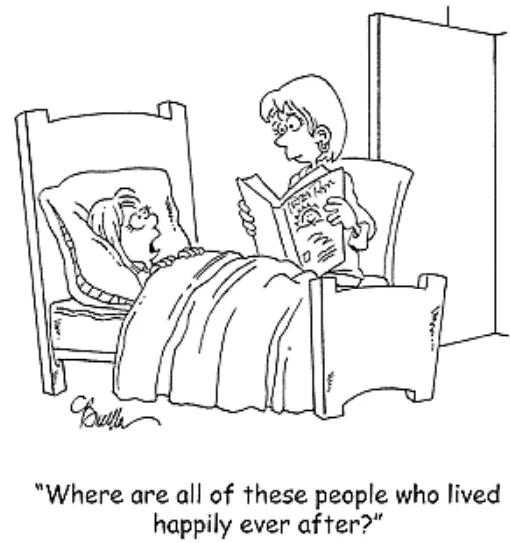
    Assuntos: Quadrinhos, Tirinhas e Charges | Comic Strips And Cartoons

    Ano: 2023 Banca: FGV - Fundação Getúlio Vargas Órgão: Secretaria Municipal de Educação de São Paulo


    Read Text IV and answer the two questions that follow it:

    Text IV

    Source: http://www.martybucella.com/fam37.html


    The question raised by the child in the cartoon brings out a recent view of critical literacy. Choose the option in line with such an understanding:

    Alternativas da questão 3172154
  15. Questão 415

    ID 3172153

    Disciplina: Língua Inglesa

    Assunto: Interpretação de Texto | Text Interpretation

    Ano: 2023 Banca: FGV - Fundação Getúlio Vargas Órgão: Prefeitura Municipal de Jaboatão dos Guararapes


    Read Text I and answer the questions that follow it

    Text I

    What is English as a Lingua Franca?

    ‘English’, as a language, has for some time been seen as a global phenomenon and, therefore, as no longer defined by fixed territorial, cultural and social functions. At the same time, people using English around the world have been shaping it and adapting it to their contexts of use and have made it relevant to their socio-cultural settings. English as a Lingua Franca, or ELF for short, is a field of research interest that was born out of this tension between the global and the local, and it originally began as a ramification of the World Englishes framework in order to address the international, or, rather, transnational perspective on English in the world. The field of ELF very quickly took on a nature of its own in its attempt to address the communication, attitudes, ideologies in transnational contexts, which go beyond the national categorisations of World Englishes (such as descriptions of Nigerian English, Malaysian English and other national varieties). ELF research, therefore, has built on World Englishes research by focusing on the diversity of English, albeit from more transnational, intercultural and multilingual perspectives.

    ELF is an intercultural medium of communication used among people from different socio-cultural and linguistic backgrounds, and usually among people from different first languages. Although it is possible that many people who use ELF have learnt it formally as a foreign language, at school or in an educational institution, the emphasis is on using rather than on learning. And this is a fundamental difference between ELF and English as a Foreign Language, or EFL, whereby people learn English to assimilate to or emulate native speakers. In ELF, instead, speakers are considered language users in their own right, and not failed native speakers or deficient learners of English. Some examples of typical ELF contexts may include communication among a group of neuroscientists, from, say, Belgium, Brazil and Russia, at an international conference on neuroscience, discussing their work in English, or an international call concerning a business project between Chinese and German business experts, or a group of migrants from Syria, Ethiopia and Iraq discussing their migration documents and requirements in English. The use of English will of course depend on the linguistic profile of the participants in these contexts, and they may have another common language at their disposal (other than English), but today ELF is the most common medium of intercultural communication, especially in transnational contexts.

    So, research in ELF pertains to roughly the same area of research as English as a contact language and English sociolinguistics. However, the initial impetus to conducting research in ELF originated from a pedagogical rationale – it seemed irrelevant and unrealistic to expect learners of English around the world to conform to native norms, British or American, or even to new English national varieties, which would be only suitable to certain socio-cultural and geographical locations. So, people from Brazil, France, Russia, Mozambique, or others around the world, would not need to acquire the norms originated and relevant to British or American English speakers, but could orientate themselves towards more appropriate and relevant ways of using English, or ELF. Researchers called for “closing a conceptual gap” between descriptions of native English varieties and new empirical and analytical approaches to English in the world. With the compilation of a number of corpora, ELF empirical research started to explore how English is developing, emerging and changing in its international uses around the world. Since the empirical corpus work started, research has expanded beyond the pedagogical aim, to include explorations of communication in different domains of expertise (professional, academic, etc.) and in relation to other concepts and research, such as culture, ideology and identity.

    Adapted from https://www.gold.ac.uk/glits-e/ back-issues/english-as-a-lingua-franca/


    The main objective of Text I is to:

    Alternativas da questão 3172153
  16. Questão 416

    ID 3172152

    Disciplina: Língua Inglesa

    Assunto: Interpretação de Texto | Text Interpretation

    Ano: 2023 Banca: VUNESP - Fundação para o Vestibular da Universidade Estadual Paulista Órgão: Prefeitura Municipal de Itapevi


    Leia o texto para responder às questões de números 39 a 49.

    As a scholar of education who studies grading practices, I’ve seen how important grades are to schools, students and their families.

    Teachers, too, certainly know how important grades are. In fact, teachers spend over one-third of their professional work time assessing and evaluating student learning. But most university teacher-education programs focus on curriculum and instruction, with less attention attached to assessment. These programs do not talk about how to actually grade student work.

    In keeping with a long-held tradition in education, teachers also have, and like, the autonomy to set their own practices. That has resulted in inconsistency, inequity and even unreliability in teachers’ grading practices.

    For example, teachers decide if grades will be based on tests, quizzes, homework, participation, behavior, effort, extra credit or other evidence. When surveying over 15,000 teachers, administrators, support educators, parents and students, I found teachers use a rather comprehensive range of evidence in grades. While they primarily use tests, quizzes, projects, and homework to assign grades, teachers at all grade levels also include nonacademic evidence, like behavior and effort, in their grading equations.

    Once teachers decide what to include in their grades, they decide how much weight to assign to each grade category. One teacher may weigh homework as 20% of the final course grade, while another teacher in the same grade level may choose a different weight or not grade homework at all.

    In my study, I have talked to teachers who curve grades, that is, these teachers adjust grades by adding points to all students’ scores to bring the highest score up to 100%. Other teachers in the same school told me they do not grade on a curve - they add extra credit points to students’ final course grades if they attend a school event, such as a play. Some teachers told me they also add grade points if a student was never tardy to class or never missed an assignment deadline.

    The effort to keep up with multiple teachers’ different grading expectations causes students chronic stress and anxiety, especially for those students with poor organizational, time-management and self-regulation skills. This is also the case for students competing for high grade-point averages and class rank. Still, students rarely question teachers’ grading or the grading differences between teachers; rather, they have accepted these differences because “this is how it’s always been”.

    (Laura Link theconversation.com, 16.03.2023. Adaptado)


    Suppose that, as a reader, you have never seen the word “rather” as used in the text’s final sentence. To get at its meaning you can use the reading ability named

    Alternativas da questão 3172152
  17. Questão 417

    ID 3172151

    Disciplina: Língua Inglesa

    Assunto: Sinônimos | Synonyms

    Ano: 2023 Banca: FUNDEP Gestão de Concursos Órgão: Prefeitura Municipal de Sete Lagoas


    INSTRUCTION: Read the article to answer questions 37 to 40.

    Making Sure Students’ Struggles Are Productive

    By Peg Grafwallner

    While we know every learning challenge is an empowering opportunity to grow, we also know that message might sometimes be lost on our students. Those learning challenges can cause some students to become frustrated and shut down from the learning.

    We need to empower our students to celebrate those learning challenges and help them realize that obstacles and setbacks are a valued part of the classroom culture. We need to create a not-yet classroom where productive struggle is encouraged and students see themselves as capable learners and fearless risk-takers. The not-yet approach is all about designing and creating an authentic classroom culture that encourages the process of learning while accepting that setbacks and obstacles are part of that process.

    EMBRACING THE STRUGGLE

    Let’s start with productive struggle. According to Jo Boaler, professor at Stanford Graduate School of Education, “If you aren’t struggling, you aren’t really learning. When we’re struggling and making mistakes, those are the very best times for our brains.”

    As educators we understand and appreciate the importance of that struggle. We have often struggled ourselves to learn something new. But because that new learning was important to us and because we had support in case we weren’t successful, we continued until we achieved our goal.

    So how do we create a classroom community where students value the importance of that struggle and where they see themselves as not-yet learners?

    Here are four suggestions to help you create a not-yet classroom.

    1. Create a vigorous learning intention: Scaffold success criteria that give students the opportunity to make sense of what they’re supposed to know and be able to do. Give students a chance to ask questions about the learning intention and time to paraphrase it so that it makes sense to them.

    In my book Ready to Learn: The FRAME Model for Optimizing Student Success, I explain, “When students paraphrase the learning intention and success criteria, it gives teachers a chance to discover what their students know or understand about the learning intention.”

    This discovery is critical because if students find paraphrasing the learning intention a challenge, this could indicate a gap in the students’ learning. Teachers, then, can address this gap and, if necessary, rewrite the success criteria so that the students have the opportunity to overcome the deficit.

    Scaffolding the success criteria provides a means to motivate students and gives students an opportunity to self-assess their understanding and determine whether they’ve achieved that particular criterion. As students move through the success criteria, there’s a sense of empowerment– they know they’re heading successfully toward the fulfillment of the learning intention. If they haven’t met a specific criterion, however, the teacher can dedicate time so that students are able to work in small groups with their peers or one-on-one with their teacher for more support in meeting that criterion.

    2. Eliminate the word failure from your vocabulary: As an example, if your essay directions asked students to write a thesis paragraph and a student turned in a body paragraph, did the student fail the assignment?

    The student fell short of the goal of writing a thesis paragraph, but there certainly was some degree of understanding, since the student was able to write an analytical body paragraph. Make allowances for that and offer positive guidance.

    3. Be transparent in your introduction of the work: Don’t sugarcoat the assignment or project by telling your students it’s “so easy” or that everyone will “get it.” Onthecontrary, tell your students the task will be difficult, but the work they’re about to do is worthy of their time and their talent.

    Let students know they’ll encounter setbacks and obstacles as a part of learning that task, but with support from you, their classmates, and various teacher-chosen resources, students will be able to meet that challenge and work toward mastery of the goal.

    4. Give students the time and space they need to be successful: Create learning opportunities to normalize development and empower students to realize that learning takes time and that mastery isn’t the end of growth. We’reall working within parameters of schedules, and those schedules dictate the time spent on learning. Often those schedules are determined by mandates beyond our control, but there are ways we can offer time and space within our own classrooms.

    To add in extra time, maybe the lesson covers two class periods instead of one; or maybe the teacher is able to co-teach with another educator to assist students who might need extra help, therefore moving the learning at a more structured pace.

    To offer extra space, perhaps the teacher and students could utilize the library or auditorium to give students more room to create groups or pods of learning; or maybe the teacher is able to create learning situations that move beyond the classroom walls through the use of virtual field trips. We’ve seen the curiosity and wonder in our students as they devour something that piques their interest because they have the time and the space to dig deep into something of relevance to them.

    Where each student is on their learning journey at any given time is a result of situations and experiences that might often be beyond our control. We know that high expectations don’t mean anything if the learning process doesn’t support achieving them.

    Designing classrooms and routines that normalize productive struggle as part of the learning process gives students the opportunity to meet those high expectations within a supportive yet challenging classroom community.


    The author states that “… learning challenges can cause some students to become frustrated and shut down from the learning.” A synonym for the verb to shut down is
    Alternativas da questão 3172151
  18. Questão 418

    ID 3172150

    Disciplina: Língua Inglesa

    Assuntos: Quadrinhos, Tirinhas e Charges | Comic Strips And Cartoons

    Ano: 2023 Banca: CESPE CEBRASPE - Centro de Seleção e de Promoção de Eventos UnB Órgão: Prefeitura Municipal do Recife


    Based on the precedent comic strip, judge the following items.


    The cat’s only comment is very sarcastic.

    Alternativas da questão 3172150
  19. Questão 419

    ID 3172149

    Disciplina: Língua Inglesa

    Assunto: Interpretação de Texto | Text Interpretation

    Ano: 2023 Banca: CESPE CEBRASPE - Centro de Seleção e de Promoção de Eventos UnB Órgão: Conselho Nacional do Ministério Público


    Text CB2A2

    Anyone who has interacted with superbot ChatGPT or image generator DALL-E might be wondering what the future of artificial intelligence (AI) holds for humanity.

    ChatGPT is an AI program that generates text in a very human-like manner when asked questions. Just ask DALL-E or similar programs to create a picture of a French bulldog driving a pink convertible and voila: you’ll see several versions in seconds.

    Science fiction in the mid-20th century created good-natured AI such as the computer on Star Trek helping the Enterprise crew, as well as its evil twin set on destroying its creators like HAL in Arthur C. Clarke’s famous book (or Stanley Kubrick’s 1968 film adaptation) 2001: A Space Odyssey. In 2023, however, we’re surrounded by AI that’s far more mundane than those examples. The virtual assistant in your smartphone, the airline chatbot and the robot vacuum cleaning your floors don’t seem to have any aspirations to rise above humanity and have been designed to help us.

    We should be prepared for bigger things to come than games, better chatbots or photo generators. Connectivity is key: think of AI as a general-purpose innovation like electricity that powers and connects other technologies, including sensors, robots, genomic devices and 3D printers. AI’s use will only intensify and accelerate as faster computing technology is developed, along with greater sensors capturing data, often called the Internet of Things (IoT). In the future, AI will be interwoven in virtually every aspect of commercial and personal activities.

    Peter Marber. Artificial Intelligence: Why Should We Care?. Internet: (adapted).

    Judge the following items according to the information given in text CB2A2.


    Interaction with existing AI prompts questions about the future of humanity.

    Alternativas da questão 3172149
  20. Questão 420

    ID 3172148

    Disciplina: Língua Inglesa

    Assunto: Substituição de Palavras e Reescrita de Frases | Word Substitution And Sentence Rewriting

    Ano: 2023 Banca: FUNDATEC - Fundação Universidade Empresa de Tecnologia e Ciências Órgão: Banco Regional de Desenvolvimento do Extremo Sul


    Instruction: answer questions 13 to 19 based on the following text. The highlights throughout the text are cited in the questions

    Creating Knowledge Base Videos

    1. As customers have greater access to decent broadband internet speeds, video becomes a
    2. more practical, appealing, and expected option to get support. Research says that 69% __
    3. customers prefer video over text when learning about a product or service. Social media, mobile
    4. phones, chat tools, email, and CRM tools are increasingly focused __ making video easily
    5. embeddable and viewable on their platforms. Using video in your knowledge base can supplement
    6. written answers __ engaging, visual mini-demonstrations that increase accessibility __ all skill
    7. levels and across language barriers. Customer experience leader Shep Hyken says: "Video has
    8. become one of the most cost-effective ways to promote, train, and support customers... it can
    9. both save you money and make you money”.
    10. However, creating video content is more time-consuming than publishing a text article —
    11. and it can be harder to maintain — so picking the right places to use video is important. Video is
    12. best used when:
    13. • The content is easier to show than to describe. Video can explain steps more naturally and
    14. fluidly than text or screenshots can. Lengthy lists of steps or a complex task can be
    15. cumbersome for the customer to follow along with. __ example is describing how to tie __
    16. bowtie; __ manual motions are much easier to show than to describe.
    17. • The content is frequently visited. Invest video production time into answering common
    18. questions where the effort will pay off many times over, and create space for your team to
    19. focus on the more challenging, less-common issues.
    20. • You want to create an emotional reaction to your content. Conveying emotion is easier through
    21. video, and creating a positive emotional reaction to your business helps build customer loyalty
    22. and trust.
    23. • The content changes infrequently. For cases where a part of your product doesn't change often,
    24. a video can provide significant benefit to your users by being referenced and reused regularly.
    25. • You’re documenting frequent changes. Not all video content needs to be highly produced and
    26. long-term. Small, easily-replaced, or updated videos can be a powerful tool for illustrating
    27. product changes, particularly if you don’t need to update a voiceover at the same time.

    (Available at: https://www.helpscout.com/blog/video-knowledge-base/ – text especially adapted for this test).


    Consider the following statements about the word “can” in the sentence “Video can explain steps more naturally” (l. 13) in the context presented in the article:

    I. Its past form is “could”.

    II. It could be replaced by “must” with no significative changes in meaning.

    III. It expresses permission.

    Which statements are correct?

    Alternativas da questão 3172148
Pular para o conteúdo principal