Questão
ID 1421852Disciplina: Língua Inglesa
Assunto: Notícias e Artigos Jornalísticos | News Articles
Ano: 2017 Banca: COSEAC Órgão: Universidade Federal Fluminense
The Stem Cell Debate: Is it
Over?
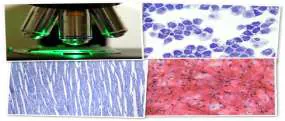
Stem cell therapies are not new. Doctors have been performing bone marrow stem cell transplants for decades. But when scientists learned how to remove stem cells from human embryos in 1998, both excitement and controversy emerged.
The excitement was due to the great potential these cells have in curing human disease. The controversy centered on the moral implications of destroying human embryos. Political leaders began to debate on how to regulate and finance research involving human embryonic stem (hES) cells.
The Ethical Issues
Until recently, the only way to get pluripotent stem cells for research was to remove the inner cell mass of an embryo and put it in a dish. The possibility of destroying a human embryo can bedisturbin g, even if it is only five days old. Stem cell research thus raised difficult questions:
- Does life begin at fertilization, in the womb, or at birth?
- Is a human embryo equivalent to a human child?
- Does a human embryo have any rights?
- Might the destruction of a single embryo be justified if it provides a cure for a countles number of patients?
Problem Solved?
Newer discoveries may bring this debate to an end. In 2006 scientists learned how to stimulate a patient's own cells to behave like embryonic stem cells. These cells are reducing the need for human embryos in research and opening up exciting new possibilities for stem cell therapies.
Both human embryonic stem (hES) cells and induced pluripotent stem (iPS) cells are pluripotent:
they can become any type of cell in the body. While hES cells are isolated from an embryo, iPS cells can be made from adult cells.
With alternatives to hES cells now available, the debate over stem cell research is becoming increasingly irrelevant. But ethical questions regarding hES cells may not entirely go away. Some experts believe it's wise to continue the study of all stem cell types, since we're not sure yet which one will be the most useful for cell replacement therapies.
An additional ethical consideration is that iPS cells have the potential to develop into a human embryo, in effect producing a clone of the donor. Many nations are already prepared for this, having legislation in place that bans human cloning.
Adapted from
<http://learn.genetics.utah.edu/content/stemcells/scissues.
Accessed Jan. 3, 2017.
Glossary:
Stem cell: Célula-tronco; bone marrow: medula; due
to: devido a; put it in a dish: colocar em um
recipiente de laboratório para pesquisa; thus: logo;
disturbing: perturbadora.
Read the text above and answer the following
questions:
The controversy mentioned in the text refers to: